Wet-to-dry styling has become a more visible category in the hair-tool market in 2026. As beauty brands continue expanding their styling ranges, one question appears more often from customers and retailers: can you straighten wet hair?
The answer depends on the tool design. A conventional flat iron, an airflow-led straightener, and a wet-to-dry hair styler may all create a smoother look, but they are built around different styling processes.
For importers, distributors, and private-label brands, this difference matters. Product naming, retail education, demonstration videos, and user instructions all need to match the actual working method of the tool.
Can You Straighten Wet Hair?
This question is not only a consumer search term. For B2B buyers, it is also a product positioning question. When a new hair tool enters the market, buyers need to know whether it belongs to the dry styling category or the growing wet-to-dry category. A clear definition helps avoid confusing product pages and makes sales communication easier.
Why Conventional Flat Irons and Wet-to-Dry Tools Are Different
A traditional flat iron is mainly designed for dry-hair styling. It uses heated plates to reshape already dried hair, which means the drying stage usually happens before straightening.
A wet to dry hair straightener follows a different concept. The tool is designed to handle moisture as part of the styling process rather than requiring a separate dryer first.
This difference is important because similar product names can describe very different systems. A “straightener,” “air straightener,” or “2 in 1 hair dryer straightener” should not automatically be considered the same type of appliance.
How Purpose-Built Wet-to-Dry Systems Change the Styling Process
A purpose-built wet-to-dry tool can use different engineering approaches depending on the model. Some focus on controlled airflow, while others combine airflow with heated or guided styling surfaces.
For buyers, the key question is not only whether the tool can create straight hair. The more important questions are:
- What starting hair condition is the product designed for?
- How does it move from moisture removal to finishing?
- Is the user routine easy to explain through packaging and retail content?
For a deeper look at product evaluation and sourcing considerations, Link Beauty’s wet-to-dry air straightener sourcing guide provides additional information for brands reviewing this category.
Starting Moisture Level: Wet, Damp, and Towel-Dried Hair
Wet hair, damp hair, and towel-dried hair are often used interchangeably in online content, but they describe different starting conditions. For a wet-to-dry hair straightener, moisture level affects how the tool should be positioned and demonstrated. Clear usage instructions help both retailers and end users understand what the product is designed to do.
Why Starting Moisture Level Matters
Dripping-wet hair contains more surface water than towel-dried or lightly damp hair. A product designed for wet-to-dry styling needs a clear operating method that matches the intended starting condition.
For buyers, this is one reason why sample evaluation is important. A specification sheet can explain temperature settings and motor information, but it cannot replace hands-on testing.
A practical sample review should keep the conditions consistent:
- same hair starting condition;
- same styling section size;
- same mode selection;
- same testing process.
This makes it easier to compare different samples and judge whether the product story matches the actual user experience.
Can You Straighten Damp Hair?
Damp hair can be styled with a tool that is specifically designed for wet-to-dry use. That point matters. A standard flat iron should not be treated as a substitute simply because the hair is only partly wet.
Before retail copy or demonstration content is approved, the intended starting condition should be clear. This is especially relevant for marketplace listings and short-form video, where the user may only see a few seconds of the styling process. Showing the correct starting condition keeps the product message accurate and easier to follow.
Air Straighteners vs Wet-to-Dry Flat Irons
The terms used in the market can overlap, but the technology behind these products is not always identical. In 2026, wet-to-dry styling has expanded beyond one single format. Some products are airflow-led, while others combine airflow with heated or guided styling components.
For B2B buyers, understanding these differences helps with category placement and product communication.
How Wet-to-Dry Styling Systems Differ
| Product type | Typical starting hair | Main styling system |
| Conventional flat iron | Dry | Heated plates |
| Airflow-led wet-to-dry straightener | Depends on model | Controlled heated airflow |
| Hybrid wet-to-dry styler | Wet or damp, depending on model | Airflow plus heated or guided styling surfaces |
These categories describe general product directions rather than fixed engineering rules.
For example, some premium brands use airflow as the main straightening method, while other wet-to-dry products combine airflow with additional heated styling elements. This is why buyers should review the actual product structure instead of relying only on category names.
Why Wet-to-Dry Styling Is Gaining Retail Visibility in 2026
The wet-to-dry category has expanded beyond a single premium format. New launches are increasingly compared with conventional straighteners, dryers, and multi-stylers, giving retailers more ways to position these products.
This also creates opportunities for short-form content. A wet-to-dry air styler can demonstrate the starting condition, mode selection, and styling process in one video, which fits naturally with marketplace videos, Instagram Reels, and TikTok content.
The category growth is not only about adding more features. It is also about making the styling routine easier to understand.
For beauty brands, that means product education becomes part of the sales strategy. A clear demonstration can help customers understand why a wet-to-dry tool belongs in their routine.
What B2B Buyers Should Evaluate in a Wet-to-Dry Air Styler
Market visibility can create interest, but buyers still need to separate a strong product concept from a product that performs well during sample evaluation. The final decision usually comes down to handling, operating logic, and consistency.
Evaluate the Operating System, Not Just the Headline Specification
Motor speed, power, and temperature settings are useful specifications, but they are only part of the evaluation process.
A professional sample review should consider:
- airflow behavior;
- wet and dry mode operation;
- control layout;
- handling during longer styling sessions;
- consistency between different use scenarios.
For a manufacturer, these details influence how easily a product can move from development into retail channels.
Link Beauty’s company manufacturing and testing capabilities include product R&D, PCBA production, production-line testing, hair straightener aging testing, laboratory testing, plug-wire bending testing, and simulated transportation vibration testing.
Product Naming Should Match the Styling System
Terms such as air straightener, wet to dry hair styler, and 2 in 1 hair dryer straightener can help customers find a product, but they should match the actual design.
For private-label projects, consistent product positioning matters. A retailer should be able to understand the product category from the product page, packaging, and demonstration content without needing extra explanation.
Link Beauty’s 2-in-1 hair dryer straightener guide for private-label brands provides another reference point for brands evaluating this type of styling product.
How the Link Beauty M8807 Fits the Wet-to-Dry Category
The Link Beauty M8807 fits into the wet-to-dry category through its separate wet and dry styling modes. Instead of positioning the product only around specifications, the clearer story is the user routine: wet styling first, then dry styling and finishing when needed.
Separate Wet and Dry Modes Create a Clearer User Routine
The Link Beauty M8807 2-in-1 hot air styler uses a 110,000 RPM BLDC motor, 1200W rated power, two airflow speeds, separate wet and dry modes, and plasma ion technology.
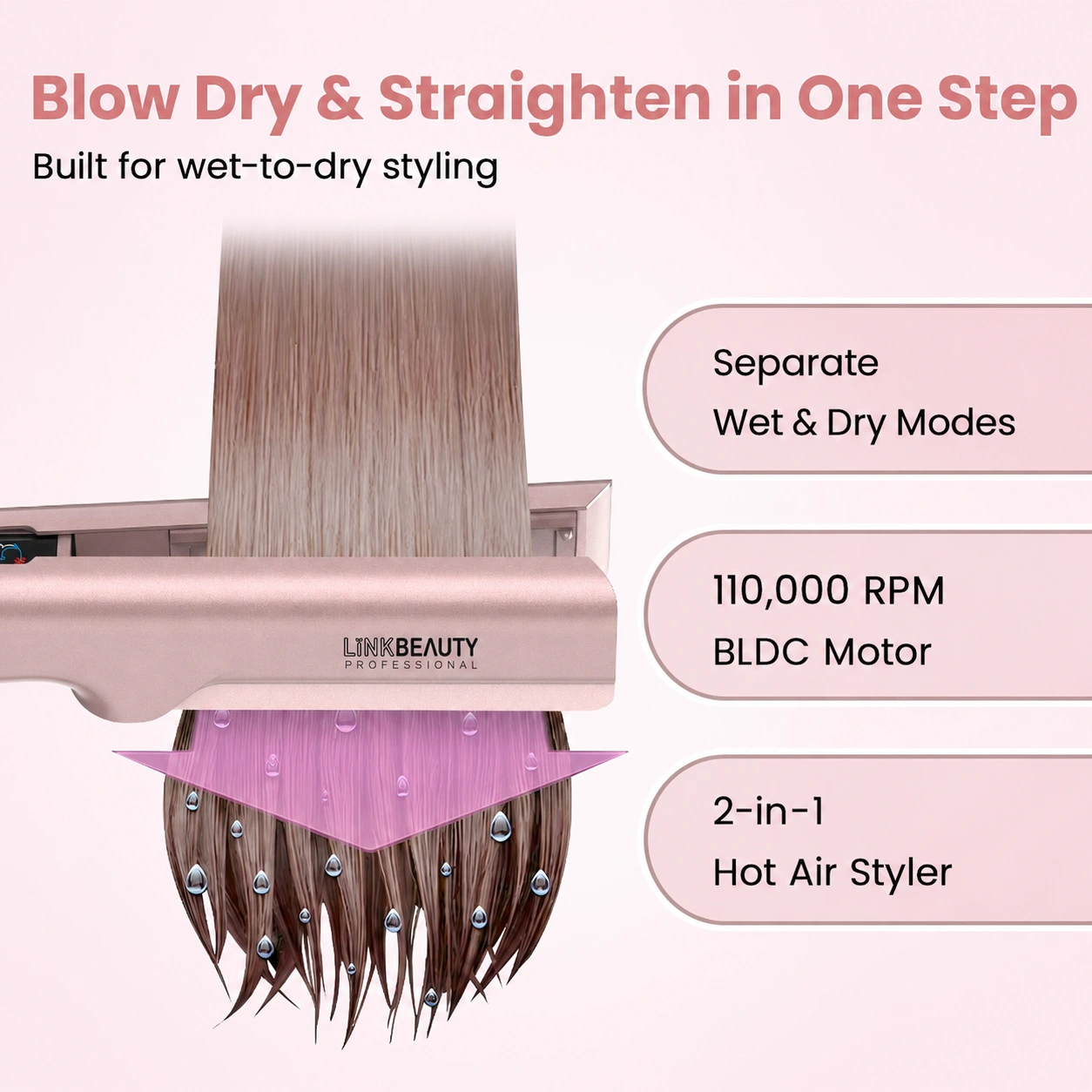
The product provides wet mode temperature settings of 80°C, 110°C, and 140°C. Dry mode provides 120°C, 140°C, and Boost settings.
For buyers, the important point is not simply the number of settings. It is that the product has separate operating logic for different styling situations, making it easier to explain within a product range.
From Sample Evaluation to Market Positioning
For a private label air straightener project, the sample should guide the final market message.
Different channels may focus on different selling points. A marketplace seller may need a simple demonstration story, while a distributor may focus more on consistency, documentation, and product training.
The best product positioning starts with what the tool actually does well.
Conclusion
So, can you straighten wet hair? Yes, when the appliance is specifically designed for wet-to-dry styling and used according to its intended operating conditions.
For B2B buyers, the bigger consideration is not just the category name. It is whether the styling system, product explanation, and customer expectation all match.
Wet-to-dry air stylers are becoming a clearer category in 2026, with more products now positioned around combined drying and straightening routines. For brands, the category also works well for short product demonstrations and clear use-case positioning. Brands evaluating this segment should still focus on real sample performance, product structure, and market positioning before moving into production.
For M8807 project discussions, brands can contact Link Beauty for product details and sample evaluation.
FAQ
Q1: Can you straighten wet hair?
A: Yes, but only with a tool specifically designed and instructed for wet-to-dry styling. A conventional flat iron should generally be treated as a dry-hair styling tool.
Q2: Can you straighten damp hair?
A: Damp hair can be styled with a purpose-built wet-to-dry tool when that starting condition matches the product instructions. Buyers should confirm the intended use before creating retail content.
Q3: What is a wet-to-dry hair straightener?
A: A wet-to-dry hair straightener is a styling tool designed to combine moisture removal and straightening within one routine. Different models may use airflow-led systems, heated surfaces, or hybrid designs.
Q4: What is the difference between an air straightener and a flat iron?
A: A flat iron mainly uses heated plates on dry hair. An air straightener uses airflow as a core part of the styling process, although some designs may also include additional heated or guided styling components.
Q5: What should buyers check when sourcing a wet-to-dry air styler?
A: Buyers should review the intended hair starting condition, airflow, heat settings, mode logic, controls, handling, sample performance, and whether the product claims match the actual design.