Wet-to-dry styling gives beauty brands a clear retail proposition: one appliance takes the user from towel-dried hair toward a straight, finished look. That promise is easy to demonstrate, but the product behind it has to do several jobs well at the same time. Airflow, heat control, operating modes, handling, and finish all influence whether the idea works in daily use.
For B2B buyers, the opportunity is not simply adding another hot air styler to a catalogue. It is selecting a wet to dry straightener with a defined use case, a credible specification, and a production plan that can support repeat orders.
Why Wet-to-Dry Styling Creates a Commercial Opportunity
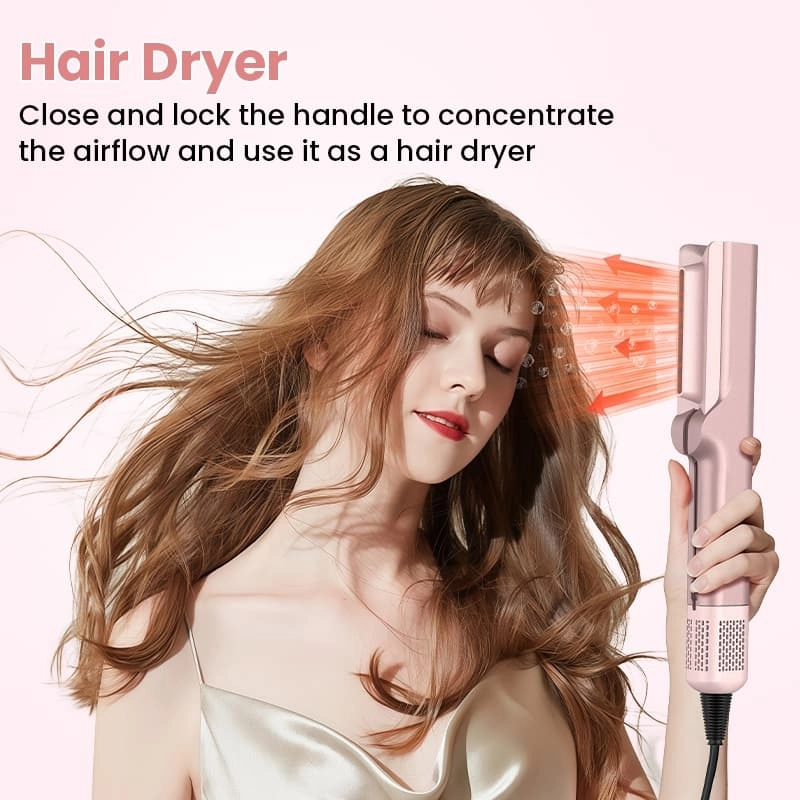
A conventional straightener enters the routine after drying. A wet-to-dry air straightener combines heated airflow with straightening, reducing the need to switch between separate tools. This gives brands a visible product benefit for e-commerce videos, retail demonstrations, and distributor presentations. Weak performance is equally easy to spot. Slow moisture removal, confusing controls, or excessive passes can quickly damage the proposition.
The Category Offers More Than a Cosmetic Line Extension
For brands already selling flat irons or hair dryers, an air straightener creates a more meaningful step up than a new color or display. It can sit above a standard straightener as a higher-value model or become the lead product in a new styling range.
The strongest fit is usually a brand that can support demonstration content, clear instructions, and after-sales service. A basic flat iron may remain more suitable for projects built mainly around a low entry price and simple dry-hair straightening.
Product teams can compare the wider Link Beauty electrical hair styling tool range when deciding where a wet-to-dry model fits within the assortment.
Channel Fit Matters Before Feature Selection
Different channels create different approval standards. Marketplace sellers tend to focus on customer reviews, returns, and how clearly the product works on video. Distributors often place greater weight on packaging, documentation, repeat-order consistency, and claim handling. Salon-focused brands may also evaluate comfort during repeated use.
This decision determines which features create commercial value and which ones only increase cost.
Evaluate the Styling Process, Not Just the Specification Sheet
Once the product position is clear, sample testing needs to reflect the actual user routine. A wet-to-dry tool must remove moisture, guide the hair, maintain controlled heat, and remain comfortable through a complete session. A weakness in any one area may later appear as complaints, replacement requests, or poor retailer feedback. The test also shows whether the product claim is easy to demonstrate and train.
Test and Record Samples Under Consistent Conditions
Compare each sample on evenly towel-dried hair using the same section size, starting moisture level, mode, and test sequence. Record the sample version, date, operator, and observations so the approval decision remains traceable.
A practical review can cover:
- moisture removal from roots to ends;
- number of passes required;
- airflow and heat consistency;
- access around the root area;
- button placement and handling;
- mode changes during use;
- performance during repeated operation.
Photos or short videos give the product, sales, and sourcing teams a common reference for later production checks.
Reject a Poor Product Match Early
A technically interesting model may still be wrong for the project. Excessive passes, awkward handling, unclear modes, or a retail price that does not fit the channel are valid reasons to stop development.
Early rejection prevents investment in packaging, content, compliance work, and inventory for a product that is difficult to support.
How the Link Beauty M8807 Works
The Link Beauty M8807 wet-to-dry air straightener is a 2-in-1 high-speed BLDC multi styler designed for wet and dry hair styling. It combines a 110,000 RPM motor, 1200W rated power, two airflow speeds, separate wet and dry settings, and plasma ion technology.
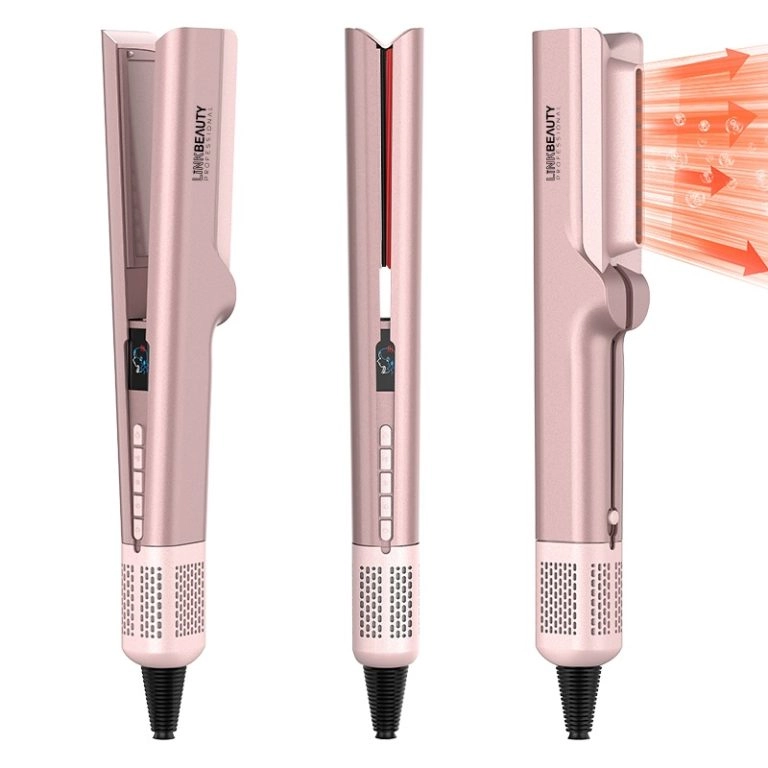
This configuration gives the M8807 two clear use cases. Wet mode is designed for wet-hair styling and offers 80°C, 110°C, and 140°C. Dry mode is designed for dry-hair styling and offers 120°C, 140°C, and Boost. The separate modes create a clearer user and training flow.
Wet and Dry Modes Have Different Jobs
Wet mode offers 80°C, 110°C, and 140°C settings. These options allow the user to select a lower or higher heat level during moisture removal according to the styling requirement.
Dry mode offers 120°C, 140°C, plus Boost. The dry settings focus on finishing after moisture removal or styling already-dry hair. Boost is a separate operating option and should not be presented as a specific temperature unless the final technical specification assigns one.
Packaging, manuals, videos, and retailer training can clearly explain when to use each mode.
Motor, Power, Airflow, and Heat Work as One System
The 110,000 RPM BLDC motor drives the high-speed airflow required for wet-to-dry styling. The 1200W system supplies the electrical power for the airflow and heating functions, while the two airflow speeds give the user additional control during the routine.
None of these figures operates alone. Sample approval still depends on moisture removal, airflow stability, heat behavior, root access, handling, and the number of passes required. The advantage of the M8807 configuration is that the motor, power, airflow choices, and wet/dry controls are built around one defined styling process rather than a single headline feature.
Plasma Ion Adds a Measurable Ion Function
The M8807 has a plasma ion output of at least 200 million ions per cubic centimeter. This gives the product a specific ion specification rather than a general “ionic” label.
Keep the commercial message close to the approved sample, without unsupported claims about repairing hair, preventing all damage, or producing identical results for every hair type.
Calculate the Cost of the Complete Project
A product can pass the styling test and still fail commercially once packaging, testing, documentation, inspection, and after-sales handling are included. Defining the complete project before mass production gives a more realistic view of margin and timing. It also prevents late changes from disrupting artwork, testing, or launch plans.
Finalize the Market Configuration
Record the required voltage, plug, labels, instructions, traceability details, packaging, and destination-market documentation in the project specification. Electrical or control changes may affect testing and technical files, while cosmetic branding and packaging follow their own approval process.
The project schedule also needs separate stages for sample preparation, customization review, artwork approval, testing, packaging confirmation, and mass production. This makes delays easier to identify and manage.
Define Customization and Service Terms
Link Beauty provides OEM and ODM support for electrical hair styling products. Its guide to private-label hair styling tool development covers the broader development process from concept and prototype work to branding and production.
For an M8807 order, place the agreed branding, color, packaging, electrical configuration, control requirements, inspection method, and change-control process in writing. Warranty handling, defective-unit claims, replacement arrangements, and repeat-order requirements also belong in the commercial agreement.
Connect the Approved M8807 Sample to Production
Sample approval is the point where the project changes from product selection to production control. The approved unit needs a matching written specification so the product team, manufacturer, and inspection company work from the same reference. This matters because the same model can involve different plugs, control programs, branding, or packaging. One approval standard reduces ambiguity before inspection and shipment.
Use One Approval Standard
The final approval record can cover appearance, modes, controls, electrical details, labels, instructions, packaging, and inspection requirements. Record and approve any later change to the motor, control program, cable, heating system, housing, or another agreed component before production continues.
This creates a clearer basis for first-order consistency, repeat orders, final inspection, and claim review.
Apply Factory Capabilities to the Product Brief
Link Beauty handles product research and development, PCBA production, production-line testing, hair dryer and hair straightener aging tests, laboratory testing, plug-wire bending testing, and simulated transportation vibration testing. The Link Beauty company and factory page gives buyers a closer view of these manufacturing and quality-control resources.
The value comes from applying the relevant checks to the agreed M8807 specification. A factory capability is most useful when it becomes part of a defined inspection or testing plan for the project.
Conclusion
A wet to dry straightener can give a beauty brand a stronger product proposition than another standard flat iron, but the project has to work at three levels: user experience, commercial fit, and production consistency.
The M8807 brings together a 110,000 RPM BLDC motor, 1200W power, two airflow speeds, separate wet and dry modes, defined temperature options, and plasma ion technology in one 2-in-1 hot air styler. Beauty brands evaluating a private-label air straightener can contact Link Beauty to request the current M8807 specification, arrange sample evaluation, and define the electrical, branding, packaging, documentation, and production requirements for the project.
FAQ
Q1: Is the M8807 suitable for private label air straightener projects?
A: The M8807 is suitable for private-label evaluation by brands, importers, and distributors. Available branding, color, packaging, electrical, and control options are confirmed for each OEM or ODM project.
Q2: What are the main M8807 specifications?
A: The M8807 combines a 110,000 RPM high-speed BLDC motor, 1200W rated power, two airflow speeds, separate wet and dry modes, and plasma ion technology.
Q3: How do the M8807 wet and dry modes differ?
A: Wet mode provides 80°C, 110°C, and 140°C settings for towel-dried hair. Dry mode provides 120°C, 140°C, and Boost for dry-hair styling, finishing, and touch-ups.
Q4: What should buyers test before approving an M8807 sample?
A: Evaluate moisture removal, airflow stability, heat behavior, root access, handling, mode switching, required passes, and repeated operation. Record the sample version, test conditions, and observations for later production comparison.
Q5: What must be confirmed before M8807 mass production?
A: Finalize the approved sample, written specification, voltage, plug, controls, branding, packaging, instructions, required documentation, inspection method, production schedule, change-control process, and claim-handling terms.