
A 2600W ionic hair dryer wholesale project can be a strong candidate when the buyer needs a clearly positioned professional or salon-oriented SKU, but wattage alone is not enough to approve it. The useful question is whether the complete product combination—motor, airflow controls, handling, noise, ion function, accessories, electrical version, and packaging—fits the intended channel.
For a retailer or distributor, that combination determines how the product can be listed and demonstrated. For a private-label brand, it also determines what must be confirmed before artwork and sampling move forward.
This guide uses Link Beauty’s 2600 model as a practical reference for B2B evaluation. It is designed for importers, salon-equipment distributors, professional beauty retailers, and brand owners comparing high-power hair dryers for a product line. The goal is to help a buyer decide what the model is for, what the specification can support, and which details still need confirmation in the RFQ and sample process.
Start With the Product Role, Not the Wattage
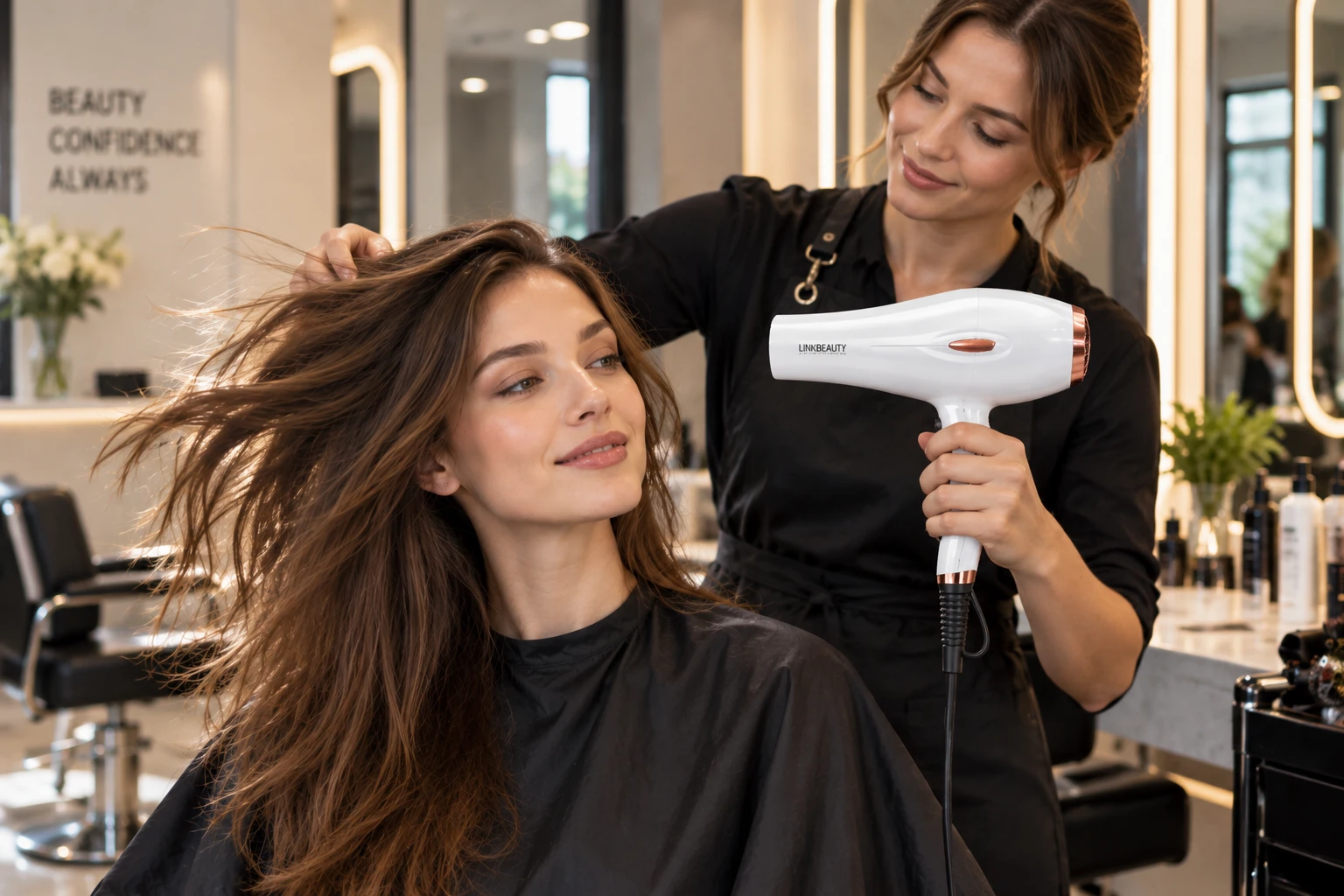
The first decision is where the dryer belongs in the range. A high-power dryer may be positioned for salon stations, professional beauty distribution, premium home use, or a mixed channel.
Each route changes the useful balance between power, weight, noise, accessories, packaging, and price—although pricing itself must be quoted for the specific project rather than assumed from the wattage.
A 2600W AC model is not automatically the right choice for every buyer. A salon distributor may value a familiar high-power format and attachment set, while a travel-focused retailer may prioritise compactness or a different electrical configuration.
Write the intended customer, channel, and use scenario into the RFQ before comparing supplier replies. This prevents a technically impressive model from being assessed against the wrong commercial brief.
How to Read a 2600W Ionic Hair Dryer Specification
Power and Motor
The Link Beauty 2600 model combines 2600W power with an AC motor. For a B2B buyer, the practical implication is that the model should be discussed as a high-power dryer rather than marketed only through a vague “fast” claim.
The motor type and power rating belong together in the product brief, because a specification sheet that names wattage without the motor configuration leaves the buyer with an incomplete product description.
Use the model number, rated voltage, frequency, and motor type as one version-controlled block in the RFQ.
Speed, Heat, and Cold Air Controls
The configuration includes three speed settings and an instant cold-shot button. These controls matter because they give a retailer more than one selling point: the dryer can be described around adjustable airflow and finishing control rather than a single high-power headline.
Buyers should still verify the exact heat-setting wording, switch layout, button feel, and control labels on the approved sample before preparing packaging or marketplace copy.
Weight and Noise
The model specifications give a weight of 297g and noise below 78dB. Those figures can materially change the product’s channel fit. A lighter body may support longer handling sessions, while a stated noise figure gives a buyer a concrete point to verify during sample review.
Neither figure should be turned into a promise that the dryer will feel quiet in every salon or suit every user. Ask how the values were measured and make sure the approved sample, specification sheet, and final artwork use the same version.
Why the Attachment Set Changes the SKU Story
Attachments are part of the product offer, not an afterthought. The 2600 model includes two nozzles, one diffuser, and an instant cold-shot button. A concentrator-style nozzle can support directed airflow and finishing work; a diffuser can make the SKU more relevant to buyers serving customers who want volume or a less concentrated airflow routine.
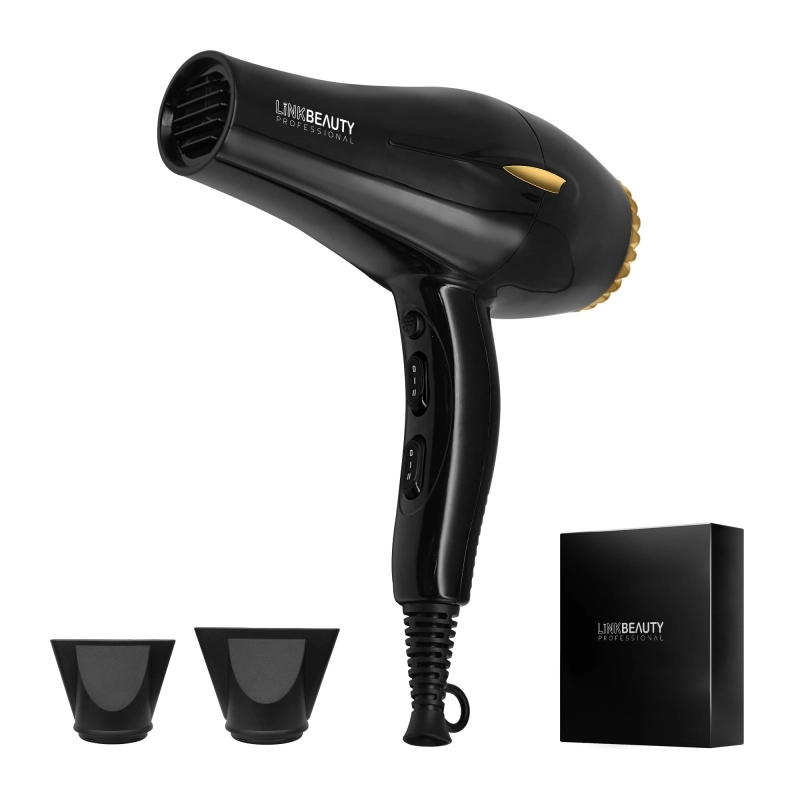
The correct retail message depends on the actual accessory design and the use instructions supplied with the approved version.
For wholesale buyers, the accessory set also affects carton content, product photography, inventory control, and customer-service questions. Confirm whether the accessories are standard for the requested model, whether they can change by project, and how each item is named on the packing list. This is a small check that can prevent a large mismatch between the listing, the quotation, and the delivered assortment.
How Ionic and Self-Clean Functions Should Be Positioned
The model is described with ionic technology and an auto self-clean function. These features can help define a more complete product proposition, but they need disciplined wording.
An ionic function may be presented as part of the styling system; it should not be expanded into guaranteed results for every hair type, permanent repair claims, or a promise to eliminate all frizz.
Likewise, auto self-clean should be explained through the actual operating instructions and maintenance limits rather than treated as proof that no cleaning or care is ever required.
Use Electrical Details to Screen the Right Market Version
The product specifications include 110V~60Hz and 220–240V~50Hz configurations. That is useful for an importer screening market fit.
Confirm whether the quotation refers to one selectable version or separate electrical versions, then verify the plug, cord, rating label, manual, packaging language, and destination-market documentation. Keep these items attached to the exact model and sample approval record.
This check is especially important when a brand sells through more than one country. A product can have an attractive headline specification and still require a different plug, label, instruction set, or documentation package for another channel.
Treat the electrical configuration as a purchase condition, not a marketing adjective. If the target market is not yet fixed, ask the supplier to quote the alternatives separately instead of combining them into one unclear line.
A Practical B2B Decision Framework
Use the following sequence when deciding whether a 2600W ionic hair dryer belongs in your range:
- Define the channel: salon distribution, professional retail, premium home use, or a mixed range.
- Record the required electrical version, plug, language, label, and packaging market before comparing quotations.
- Match the power and AC motor specification to the user scenario instead of treating wattage as a complete performance claim.
- Review weight, noise, controls, ion function, self-clean wording, cord length, and attachment set on a physical sample.
- Lock the approved model number and version-specific specifications before artwork, listing creation, or bulk-order approval.
This sequence creates a useful bridge between product selection and sample approval. It also makes supplier replies easier to compare because every candidate is being judged against the same commercial and technical conditions.
Turn Product Fit Into an RFQ
Link Beauty’s hair dryer range gives buyers a starting point for comparing product roles. Its Link Beauty manufacturing and testing capabilities include product R&D, PCBA production, production-line testing, hair dryer aging tests, laboratory testing, plug-wire bending tests, and simulated transport vibration equipment.
These capabilities do not replace project-specific verification, but they give a procurement team concrete subjects to include in a supplier discussion: the approved specification, sample checks, testing scope, electrical version, accessory set, and documentation required for the target market.
Before contacting a supplier, prepare the target market, estimated quantity range, channel, branding direction, packaging needs, electrical configuration, and the points you want to test on the sample. If the model fits that brief, send Link Beauty a product enquiry that is specific enough to receive a useful reply.
Conclusion
A 2600W ionic hair dryer is worth considering for wholesale when the buyer needs a high-power AC product with a clear accessory set, adjustable controls, and a defined salon or retail role.
The correct decision does not come from wattage alone. It comes from matching power and motor type with handling, noise, ion and self-clean claims, attachments, electrical version, and the expectations of the target channel.
For the next step, treat the model as a candidate for structured evaluation. Confirm the market version, request the current specification, review the sample against the intended SKU brief, and record any changes before packaging or bulk-order approval. If the product role is clear, a focused RFQ can move the discussion from a generic wholesale enquiry to a practical product decision.
FAQ
Is a 2600W hair dryer suitable for wholesale salon lines?
It can be suitable when the target channel needs a high-power AC dryer and the electrical version, handling, noise, controls, and accessory set fit the range. Buyers should approve the exact sample and market configuration rather than assuming that 2600W alone makes a product suitable for every salon or retail channel.
What should buyers check besides wattage?
Check motor type, airflow and heat controls, weight, noise, cold-shot operation, ionic and self-clean functions, cord, attachments, packaging, electrical version, and the consistency between the sample and the written specification. These details determine whether the product can be listed accurately and supported after sale.
What accessories come with the Link Beauty 2600 model?
The configuration includes two nozzles and one diffuser, together with an instant cold-shot button. Buyers should still confirm the accessory names, fit, quantity, and packaging position for the exact version being quoted, especially if the product will be sold under a private label or across more than one market.
Can buyers assume that the 2600W model is globally compatible?
No. The specifications include 110V~60Hz and 220–240V~50Hz configurations, but buyers should confirm whether these are separate versions or a selectable design. Plug type, label, manual, packaging, documentation, and destination-market requirements must be checked for the specific order.
What should be included in a wholesale enquiry?
Include the target market, product role, quantity range, electrical version, plug, branding and packaging needs, accessory requirements, sample purpose, and the functions you want to verify. A concise brief helps the supplier respond to the real product decision rather than sending a generic catalogue.