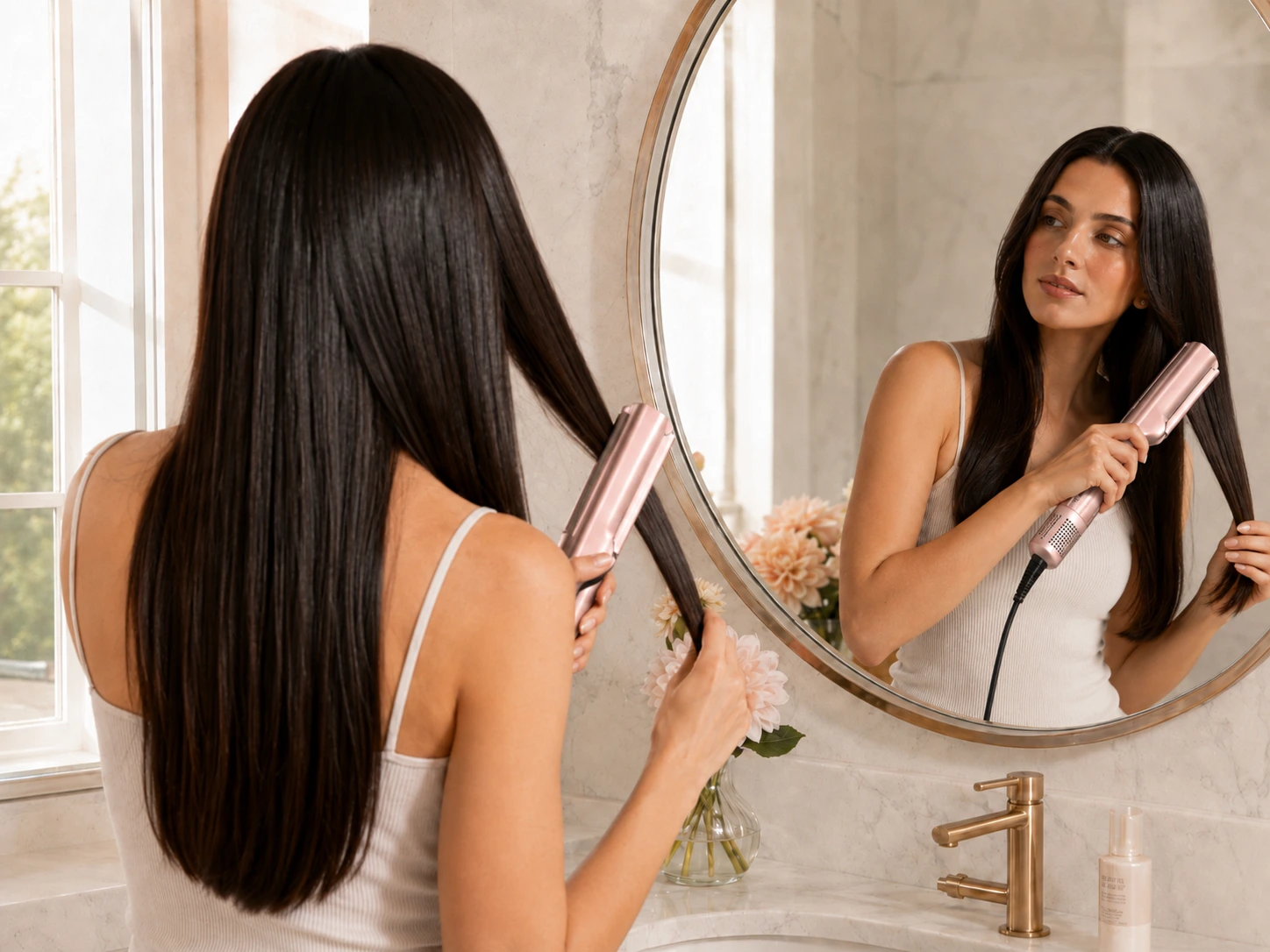
Glass hair has become one of the most visible sleek-hair trends of 2026. The look is easy to spot: smooth lengths, controlled texture, and a reflective finish that catches the light while the hair still moves naturally. By August 2026, the mirror-finish look was appearing across major beauty media and had been circulating on TikTok and Instagram for months.
For beauty brands, importers, and distributors, the opportunity goes beyond the trend itself. Glass hair also brings sleek styling, the air straightener, and the wet to dry hair straightener into the same product conversation. That gives product teams a timely way to introduce a newer styling category through a finish end users already recognize.
The Glass Hair Trend in 2026: Finish, Texture and Consumer Appeal
Glass hair is more than another term for straight hair. Its appeal comes from the finish: smooth alignment, controlled flyaways, and visible shine across the lengths. For B2B buyers, this distinction matters because shoppers usually recognize the result before they care about the motor, heating system, or operating mode. A strong product story therefore starts with the styling need and then explains how the tool supports it.
Glass Hair vs Conventional Straight Styles
Straight hair can still look soft, textured, or slightly matte. Glass hair places more emphasis on a uniform, polished surface.
In 2026, sleek hair is looking less rigid and more fluid. Movement still matters, even when the finish is highly polished. The hair can keep a sleek, reflective appearance without looking overly stiff.
That makes glass hair useful for brands developing styling content. Instead of presenting straightening as a single result, brands can talk about smoothing, polished finishing, controlled styling, and shine-oriented looks without forcing every customer into the same routine.
Why Glass Hair Has Re-Entered the 2026 Beauty Cycle
The reflective finish works especially well in visual content. Close-up movement, side lighting, and before-and-after styling can communicate the difference in a few seconds, which makes the trend a good fit for TikTok, Instagram Reels, retailer videos, and marketplace content.
For product teams, that creates a practical content opportunity. A short wet-to-finished demonstration can introduce the styling result first, while longer product content explains airflow, heat selection, and operating modes. Trend content gets attention; technical content gives the buyer a reason to stay.
What Creates a Reflective Glass-Hair Finish?
A polished finish comes from several parts of the routine working together. Hair preparation affects softness and surface condition, while the styling stage controls direction, shape, and smoothness. This distinction is important for brands planning product claims because a styling tool should be presented around the functions it actually performs. It also leads to a practical category question: should sleek styling be built around a conventional flat iron or an air-straightening system?
Cuticle Alignment and Light Reflection
A smoother hair surface allows light to reflect more evenly. When the strands sit in a more consistent direction, the finished style can look brighter and more polished.
In daily styling, this is why two straight sections can still look different. One may appear smooth and reflective, while another keeps visible texture or flyaways.
For product buyers, the takeaway is straightforward. Hair guidance, airflow, heat selection, section size, and styling technique all contribute to the final appearance. Looking only at one headline specification gives an incomplete picture of the user experience.
Hair Care and Styling Tools Play Different Roles
Hair care supports softness, hydration, and surface condition. Styling tools handle shape, alignment, controlled heat, and airflow.
That separation gives brands cleaner product messaging. A high speed air styler can be presented around its actual styling process—how the user moves from wet or dry hair toward a smoother finish—rather than broad beauty promises.
It also makes product demonstrations easier. Airflow, mode selection, and styling movement are visible functions that distributors and retailers can show without turning the content into a technical manual.
Flat Irons vs Air Straighteners for Sleek Styling
Traditional flat irons and air straighteners can both sit in a sleek-hair range, but they approach the routine differently. This matters for distributors deciding whether a new SKU genuinely adds something to the assortment. It also matters when customers searching for a glass hair straightener begin comparing familiar plate-based tools with newer air-straightening formats.
How the Two Styling Systems Differ
| Styling factor | Traditional flat iron | Air straightener |
| Typical starting point | Dry hair | Some models support wet and dry styling |
| Main styling approach | Heated plates | Heated airflow, with guidance system varying by model |
| Routine | Dry first, then straighten | Some models combine drying and straightening |
| Range position | Established straightening category | Combined drying and styling category |
| Customer message | Precision straightening and finishing | More integrated styling routine |
The formats do not need to compete for exactly the same customer. A retailer can carry both when the reason for each SKU is clear.
Why Air-Straightening Technology Fits the Glass-Hair Trend
Glass hair puts smoothing and alignment at the center of the styling conversation. That gives the air straightener a natural role, especially when a model supports both moisture removal and dry-hair finishing.
The commercial value is the routine. Rather than treating drying and straightening as two unrelated stages, certain wet/dry tools bring them into one product concept.
For buyers evaluating this category beyond the trend angle, Link Beauty’s wet-to-dry air straightener sourcing guide covers the product and project considerations in more detail.
High-Speed Air Styling: What the Motor Specification Really Means
Motor speed is one of the most visible specifications in the high-speed hair-tool market, but the product experience comes from the complete styling system. Airflow design, temperature options, operating modes, hair guidance, and handling all matter once a sample is in the buyer’s hands. For B2B sourcing teams, this is where a specification sheet needs to turn into a practical product evaluation.
Motor Speed, Airflow and Heat Control Work as a System
The BLDC motor drives the airflow system, while the delivered airflow also depends on the air path, controls, and complete product configuration.
Wet and dry styling also place different demands on the tool. Removing moisture and finishing already-dry hair are not the same job, so clear operating modes can make the routine easier to explain to retailers and end users.
During sample evaluation, buyers can look at how naturally the tool reaches different sections, how easy the controls are to operate, and how the selected heat and airflow feel through a complete styling session.
How the Link Beauty M8807 Applies High-Speed Wet/Dry Styling
The Link Beauty M8807 2-in-1 Hot Air Styler brings drying and straightening functions into one high-speed wet/dry platform.
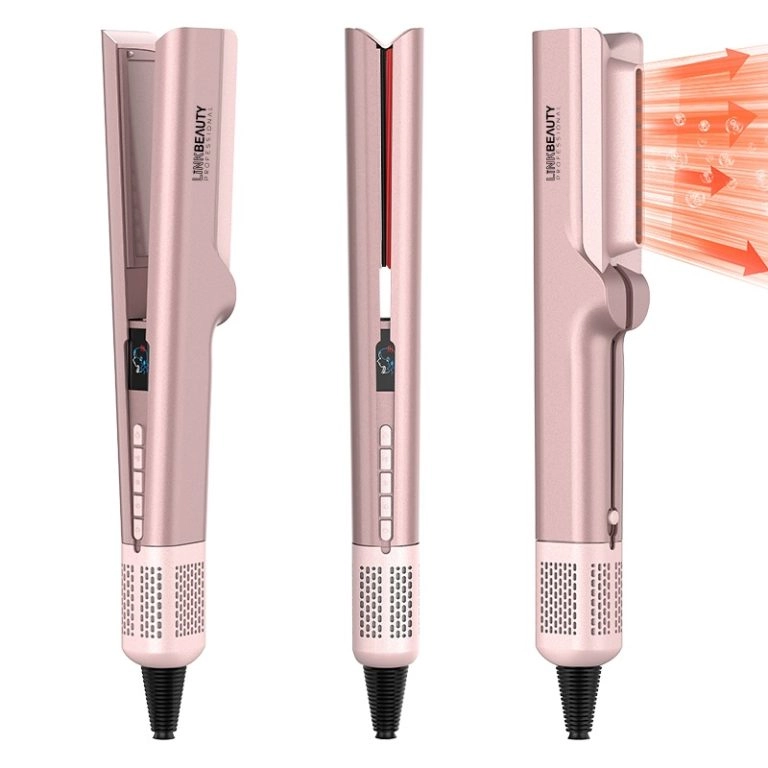
Its confirmed configuration includes a 110,000 RPM BLDC motor, 1200W rated power, two airflow speeds, separate wet and dry modes, and plasma ion technology. Wet mode provides 80°C, 110°C, and 140°C settings; dry mode provides 120°C, 140°C, and Boost.
For retail positioning, the same format can also be described as a 2 in 1 hair dryer straightener, a clear category term when a brand needs to communicate both functions quickly.
Once the operating concept is clear, the next question is commercial: how should those functions be translated into a product story that retailers and end users can recognize without reading a long specification list?
Commercial Implications of the Glass Hair Trend for Beauty Brands
Beauty trends are most useful to B2B buyers when they help explain why a product category matters. Glass hair does that well. The desired finish is immediately recognizable, while the technology can be introduced afterward as part of the styling routine. This gives beauty brands a more natural route from trend content to product education, retailer training, and eventually a sourcing conversation.
Lead With the Styling Result, Then Explain the Technology
End users usually recognize sleek hair, glossy hair, or a glass-hair finish before they recognize a specific motor specification.
For brands and distributors, the order of the message matters. Start with the styling result. Then explain why high-speed airflow, separate wet/dry modes, and heat selection are relevant to the routine.
Behind that consumer-facing story, production capability still matters to the B2B buyer. Link Beauty’s hair styling tool manufacturing and testing capabilities include product R&D, PCBA production, production-line testing, hair-straightener aging testing, laboratory testing, plug-wire bending testing, and simulated transportation vibration testing.
Positioning Glass Hair Against Liquid Hair and Sleek Blowouts
These styling terms sit close together in beauty search, but they are not identical.
Glass hair puts the strongest emphasis on a smooth, reflective surface. Liquid hair keeps a glossy finish with more fluid movement, while a sleek blowout generally retains more body through the roots and lengths.
Keeping those concepts separate gives brands more useful content angles without forcing unrelated keywords onto one page. A trend article can focus on glass hair; a styling demonstration can show the wet-to-dry routine; product content can explain the actual modes and controls.
For brands moving from category interest into commercial planning, the 2-in-1 hair dryer straightener guide for private label brands continues that journey with a stronger private-label and product-positioning focus.
Conclusion
Glass hair is still a useful 2026 trend for hair-tool brands because it gives buyers a clear styling result to work with: smooth, polished hair with visible shine and movement. The trend itself may change over time, but interest in simpler sleek-hair routines is likely to stay relevant.
For distributors and private-label brands, the more practical question is whether an air straightener adds a clear role to the existing product range. The M8807 combines high-speed airflow with separate wet and dry styling modes in one 2-in-1 format, which makes the product easier to position around a streamlined styling routine rather than a long list of specifications.
The best next step is still a real sample review. Motor speed looks good on paper; handling, mode switching, airflow, heat behavior, and overall styling feel are what buyers will notice once the product is in hand.
Brands evaluating a private label air straightener can contact Link Beauty about the M8807 and sample requirements before defining market-specific branding, packaging, and production details.
FAQ
Q1: What is glass hair?
A: Glass hair is a sleek, polished style with a smooth surface and noticeable shine. It is usually straighter and more controlled than a regular blowout, but the hair can still keep natural movement.
Q2: Is glass hair still trending for fall 2026?
A: Yes. Glass hair remains relevant for fall 2026, with recent beauty coverage continuing to highlight sleek, glossy, mirror-like finishes. The broader 2026 hair trend is also moving toward polished, healthy-looking styles that keep natural movement rather than looking overly stiff.
Q3: What is the difference between glass hair and liquid hair?
A: Glass hair generally focuses on a highly polished, mirror-like surface. Liquid hair also emphasizes shine but usually keeps more flowing movement through the lengths.
Q4: Can an air straightener help create a glass-hair finish?
A: An air straightener can support the smoothing and alignment stages of a sleek-hair routine. The final appearance also depends on hair preparation, sectioning, styling technique, and finishing.
Q5: What should buyers check when sourcing a wet-to-dry air straightener?
A: Buyers should review the complete styling system: motor configuration, airflow, heat settings, wet/dry mode logic, controls, handling, and sample performance. For private-label projects, the final electrical configuration, branding, packaging, documentation, and production requirements should also match the intended market.