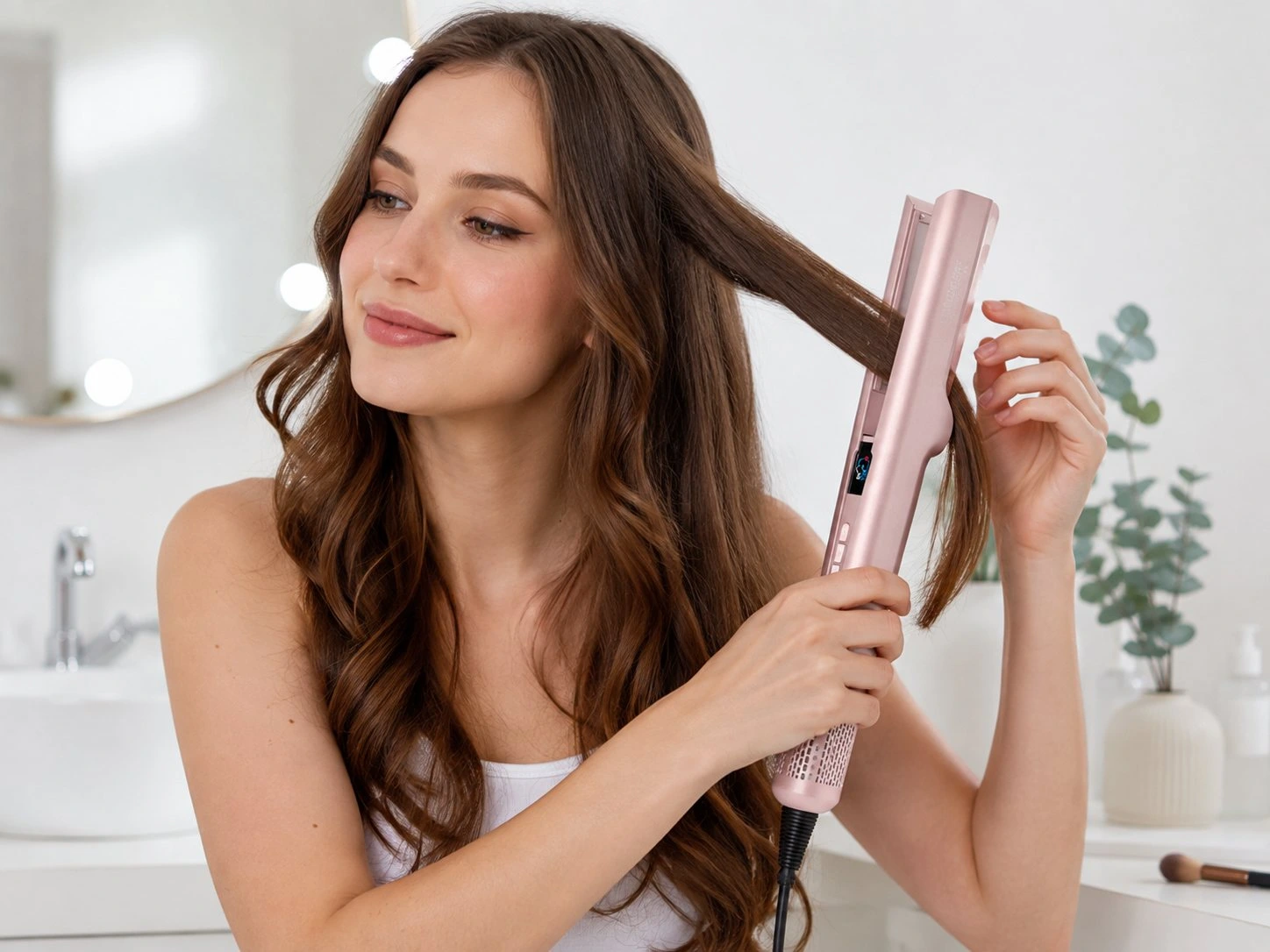
Wet-to-dry styling has become easier to recognise across the European hair-tool market. Dyson markets Airstrait in the UK around wet-to-dry straightening with air, while the wider category is also described through terms such as air straightener and 2 in 1 hair dryer straightener.
For beauty brands, importers, and distributors, growing category awareness is only the starting point. The product still needs a clear role within the range, accurate claims, and sales content that explains how the wet and dry modes differ. Without that clarity, even a strong specification can be difficult for retailers to present and for customers to follow.
The Link Beauty M8807 combines hair-drying and straightening functions with separate settings for wet and dry hair. Its commercial potential depends on how clearly the category is named, positioned, and introduced across product pages, packaging, and distributor materials.
Use Category Language Buyers Already Recognize
Category wording affects how a product is found, listed, and explained. A retailer may place an air straightener beside flat irons, while a distributor may call it a wet to dry straightener. Too many competing names create friction in catalogues, marketplace filters, and sales training. One consistent main term helps the model sit naturally within an existing electrical hair styling tool range.
Lead With One Main Product Name
“2 in 1 hair dryer straightener” gives the clearest commercial description because it states the two functions directly. “Wet to dry straightener” describes the routine, while “air straightener” works well as a supporting category term.
Keep the main name consistent across the product page, packaging, sales sheets, and distributor materials. Related terms can clarify the use case, but the M8807 should not appear under unrelated labels. Consistent naming also makes retailer onboarding easier across markets.
Keep It Separate From Nearby Tool Categories
A conventional flat iron is mainly associated with dry-hair styling through heated plates. A hot air brush normally uses a brush barrel or bristles. An attachment-based multi-styler covers a broader mix of curling, drying, smoothing, and volumizing.
The M8807 has a narrower role: hair drying and straightening in one appliance, supported by separate wet and dry settings. Use that distinction in product titles, retailer filters, packaging, and one-page sales sheets. A buyer should be able to see where the model belongs without decoding a long feature list.
Give the Product a Clear Place in the Range
A combined styling appliance does not have to replace an established dryer or flat iron. Its value comes from filling a different position in the assortment. Product teams need to decide whether the model adds a useful step between basic tools and more complex styling systems. That choice guides pricing, channel selection, and distributor presentations.
Position It Above Basic Single-Function Tools
A standard dryer still suits consumers who prefer blow-drying with a brush or diffuser. A flat iron remains familiar for dry-hair straightening and finishing.
The M8807 can sit above those entry-level tools as a more feature-rich option. In a tiered range, it may fit between a basic dryer or straightener and a broader attachment-based multi-styler. The exact position depends on the brand, sales channel, price structure, and current assortment.
A distributor with a strong flat-iron business may use the M8807 to open a wet-to-dry segment. A brand with several multi-stylers may present it as the simpler option.
Match the Position to the Sales Channel
The category is easier to sell when the wet and dry modes are visible. E-commerce brands can use short demonstrations, mode graphics, and close-up control images. Distributors can present the product as an addition to an existing dryer and straightener line.
On a marketplace page, the first image and opening lines may be all a buyer or retailer sees before moving on. Lead with the use case, then introduce the motor, power, airflow, and ion specifications.
Explain the M8807 Through Its Actual Modes
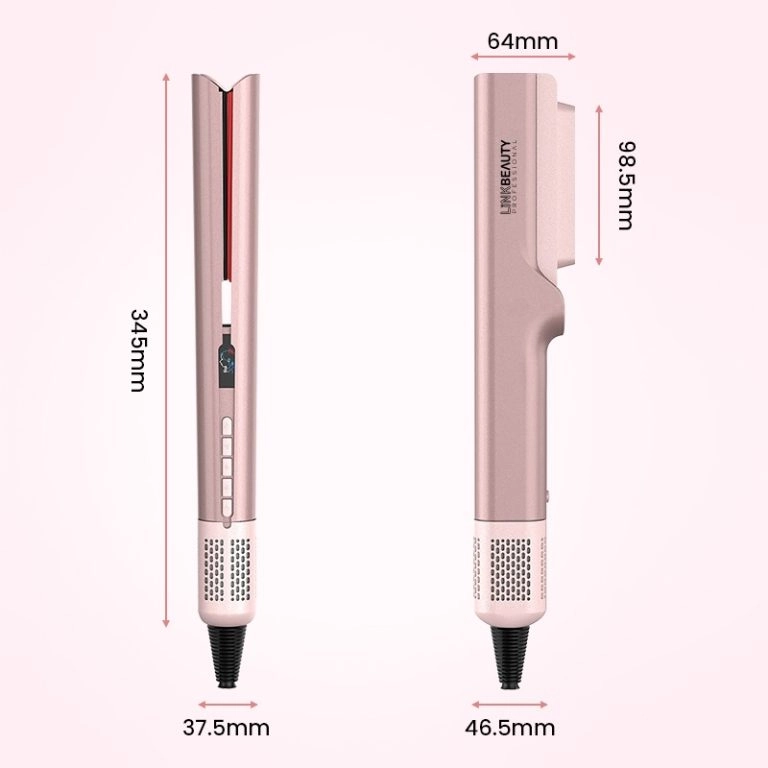
Specifications only help when a retailer can connect them to a clear styling routine. The Link Beauty M8807 wet-to-dry hair styler combines a high-speed BLDC motor, heating, airflow control, and separate wet and dry settings. Presenting the product through those modes keeps the page useful rather than turning it into a technical sheet.
Present Wet and Dry Settings Separately
The M8807 uses a 110,000 RPM high-speed BLDC motor, has a rated power of 1200W, and provides two airflow speeds. Its operating options are divided into two groups:
- Wet mode: 80°C, 110°C, and 140°C
- Dry mode: 120°C, 140°C, and Boost
Keep these groups separate in product graphics, instructions, packaging, and demonstration content. Combining them into one temperature list makes the operating sequence harder to follow.
Boost is an operating option, not a confirmed temperature. Unless the final technical specification assigns a value, keep the word “Boost” unchanged. Adding an unsupported number creates avoidable artwork revisions and may affect retailer data files.
Keep Performance Claims Close to the Specification
The M8807 has a plasma ion output of at least 200 million ions per cubic centimeter. That is a defined specification and can be stated directly.
Do not turn the ion figure into promises about repairing damaged hair, preventing every form of heat damage, or delivering the same result on every hair type. The 110,000 RPM motor also needs disciplined wording. Motor speed is confirmed; a specific drying time, number of passes, or performance advantage requires evidence from the approved sample and relevant testing.
Clear boundaries give retailers usable claims and reduce late packaging changes.
Align Retail Content With the Private-Label Brief
The product page, packaging, manual, and approved specification need to describe the same M8807 version. Small differences in mode names, plug details, or printed temperatures can slow artwork approval. UK and EU projects may also require different plug configurations, language sets, and documentation, so each market version needs a clear approval record.
Put the Use Case Before the Numbers
A mobile product page needs a practical order. Start with the category and main use case, explain the wet and dry modes, then show temperature and airflow choices. Operating images can follow, with detailed specifications and market-specific instructions lower on the page.
A large “110,000 RPM” headline may attract attention, but it cannot explain the full offer. Buyers still need to know how the modes differ and where the appliance fits in the styling routine.
For a brand developing a private label hair straightener, this structure also gives distributors cleaner content for catalogues and retailer submissions.
Confirm Market Details Before Artwork Approval
Link Beauty provides OEM and ODM support for private-label hair styling tools. Available branding, color, packaging, electrical, and control options are agreed for each project rather than assumed from a general service list.
Before printed materials move forward, confirm:
- model name, voltage, and plug configuration;
- wet and dry mode terminology;
- branding and available color options;
- packaging and instruction languages;
- destination-market documentation and inspection requirements.
Keeping UK and EU versions separate in the project brief reduces the chance of the wrong plug, manual, or artwork file being assigned to an order.
Connect Approved Content to the Manufacturing Brief
A hair straightener manufacturer contributes more than the finished appliance. Product development, testing resources, version control, and communication all affect how closely the delivered order follows the approved specification.
Link Beauty’s manufacturing and testing capabilities include product research and development, PCBA production, production-line testing, hair dryer and hair straightener aging tests, laboratory testing, plug-wire bending testing, and simulated transport vibration equipment.
The relevant checks for an M8807 order still need to be written into the project plan. Factory capability becomes useful when the test method, requirement, and acceptance standard are tied to the approved brief.
Conclusion
Wet-to-dry styling has a clearer presence in European beauty retail, supported by recognizable category language. For a brand or distributor, the next step is disciplined positioning: give the appliance a distinct role in the range, explain the wet and dry modes clearly, and keep every claim close to the approved specification.
The M8807 combines a 110,000 RPM BLDC motor, 1200W power, two airflow speeds, separate wet and dry settings, and defined plasma ion output. Buyers evaluating an air straightener can contact Link Beauty about an M8807 project to request the current specification and arrange sample evaluation, then discuss electrical configuration, branding, packaging, documentation, and production requirements for the target market.
FAQ
Q1: What is the difference between the M8807 and a conventional flat iron?
A: A conventional flat iron is mainly used for dry-hair styling. The M8807 combines airflow, heat, and straightening functions with separate settings for wet and dry hair.
Q2: What wet and dry settings does the Link Beauty M8807 provide?
A: Wet mode offers 80°C, 110°C, and 140°C. Dry mode offers 120°C, 140°C, and Boost. The M8807 also provides two airflow speeds.
Q3: Is a 2-in-1 hair dryer straightener suitable for an existing hair tool range?
A: It can fill the space between basic dryers or flat irons and broader multi-stylers. The fit depends on the brand’s price structure, channel, and current assortment.
Q4: What makes the M8807 suitable for a higher-value hair tool range?
A: The M8807 combines hair-drying and straightening functions, separate wet and dry settings, a 110,000 RPM BLDC motor, two airflow speeds, and defined plasma ion output. These features give brands a clear step-up option above basic single-function dryers and straighteners.
Q5: What should buyers confirm before starting a private-label M8807 project?
A: Confirm the approved specification, voltage, plug, controls, available branding and color options, packaging, instruction languages, documentation, inspection requirements, and production terms.