When purchasing hair tools for a salon or beauty equipment business, the product specification sheet is usually the first place buyers look. Wattage, motor type, and design features are easy to compare. However, experienced buyers know that these numbers only show part of the picture.
A professional hair dryer is used differently from a home styling tool. In a salon environment, the same device may be used repeatedly throughout the day for different hair types and styling services. Small differences in airflow performance, handling, and operating stability often become noticeable after several hours of work.
For this reason, selecting a salon hair dryer is not only about finding the highest power model. It is about choosing equipment that fits the working environment and the expectations of professional users.
BLDC motor technology has become an important direction in modern professional hair tools. A high-speed BLDC hair dryer combines advanced motor design with strong airflow capability, offering an option for salons and businesses looking for professional drying solutions.
Link Beauty develops professional hair tool solutions for business customers. The Link Beauty 2012 Large Power 2400W BLDC Blower combines 2400W power output with BLDC motor technology, providing a professional drying solution for applications that require strong performance.
Why Motor Technology Matters in Professional Hair Dryers
How BLDC Motors Change Hair Dryer Performance
The motor is the main component responsible for generating airflow inside a hair dryer. Different motor structures can influence how the product performs during daily use.
BLDC, short for Brushless Direct Current motor, uses a brushless structure instead of the traditional brushed motor design. For a deeper comparison, explore how BLDC hair dryer technology differs from traditional motor solutions. In professional hair tools, this technology provides manufacturers with another approach to developing products with stable motor operation and efficient airflow performance.
From a manufacturing perspective, developing a professional hair dryer is not only about adding more power. The motor, airflow system, product structure, and user experience all need to work together.
For salon applications, this matters because equipment is often used continuously. A stylist may move between drying, shaping, and finishing tasks within a single day. Consistent operation becomes more important when the tool is part of everyday work.
What Buyers Should Check Before Choosing a Salon Hair Dryer
Look Beyond Wattage Numbers
Wattage is one of the easiest specifications to compare, which is why many buyers start there. However, power output alone does not explain the complete performance of a hair dryer.
A higher wattage model is not automatically the best choice for every application. Buyers also need to consider how the motor delivers airflow and whether the product design matches professional use.
Important factors include:
- Motor technology
- Airflow performance
- Product handling
- Manufacturing quality
The Link Beauty 2012 Large Power 2400W BLDC Blower features a 2400W power output combined with BLDC motor technology. The product is designed for professional hair drying applications where strong airflow performance is required.
Consider How the Tool Performs During Daily Salon Work
Salon professionals use equipment differently from occasional home users. A dryer that feels comfortable during a short test may perform differently after repeated use throughout a busy schedule.
For example, during a fully booked day, a stylist may switch between different hair textures and styling requirements. The tool needs to remain practical during each service, from preparation drying to final styling steps.
When selecting a salon hair dryer, buyers usually consider:
- Whether the design fits professional routines
- Whether the product is practical for repeated operation
- Whether the supplier understands salon applications
Professional Hair Dryers vs Consumer Hair Dryers
The difference between professional and consumer hair dryers is mainly related to usage conditions.
A consumer product is generally designed for personal styling. A professional hair dryer is developed around more frequent operation and professional working environments.
| Comparison | Consumer Hair Dryer | Professional Hair Dryer |
| Typical usage | Occasional personal use | Repeated daily salon use |
| Main focus | Convenience and personal preference | Performance and workflow |
| Purchase decision | Individual choice | Business requirement |
For salon owners, distributors, and beauty equipment buyers, this difference is important because the purchasing criteria are not the same.
A product suitable for home use may not always match the expectations of a professional working environment.
Practical Benefits of High-Speed Hair Dryers in Salon Operations
Supporting Efficient Drying During Busy Working Hours
Time is an important part of salon operations. A stylist may complete multiple appointments in one day, and drying is often one of the repeated steps in the service process.
A high-speed hair dryer with strong airflow capability can help professionals complete drying tasks more efficiently while maintaining control during styling.
The difference is often easier to notice during busy periods rather than during a short product demonstration.
Maintaining Consistent Performance Across Different Styling Tasks
Professional styling involves different techniques and hair conditions. Short hair, thick hair, curly hair, and finishing work may all require different approaches.
A suitable hair dryer should provide a predictable working experience across different applications.
This is one reason BLDC hair dryers have gained attention in professional beauty equipment markets. The motor technology provides manufacturers with a modern solution when developing professional hair tools.
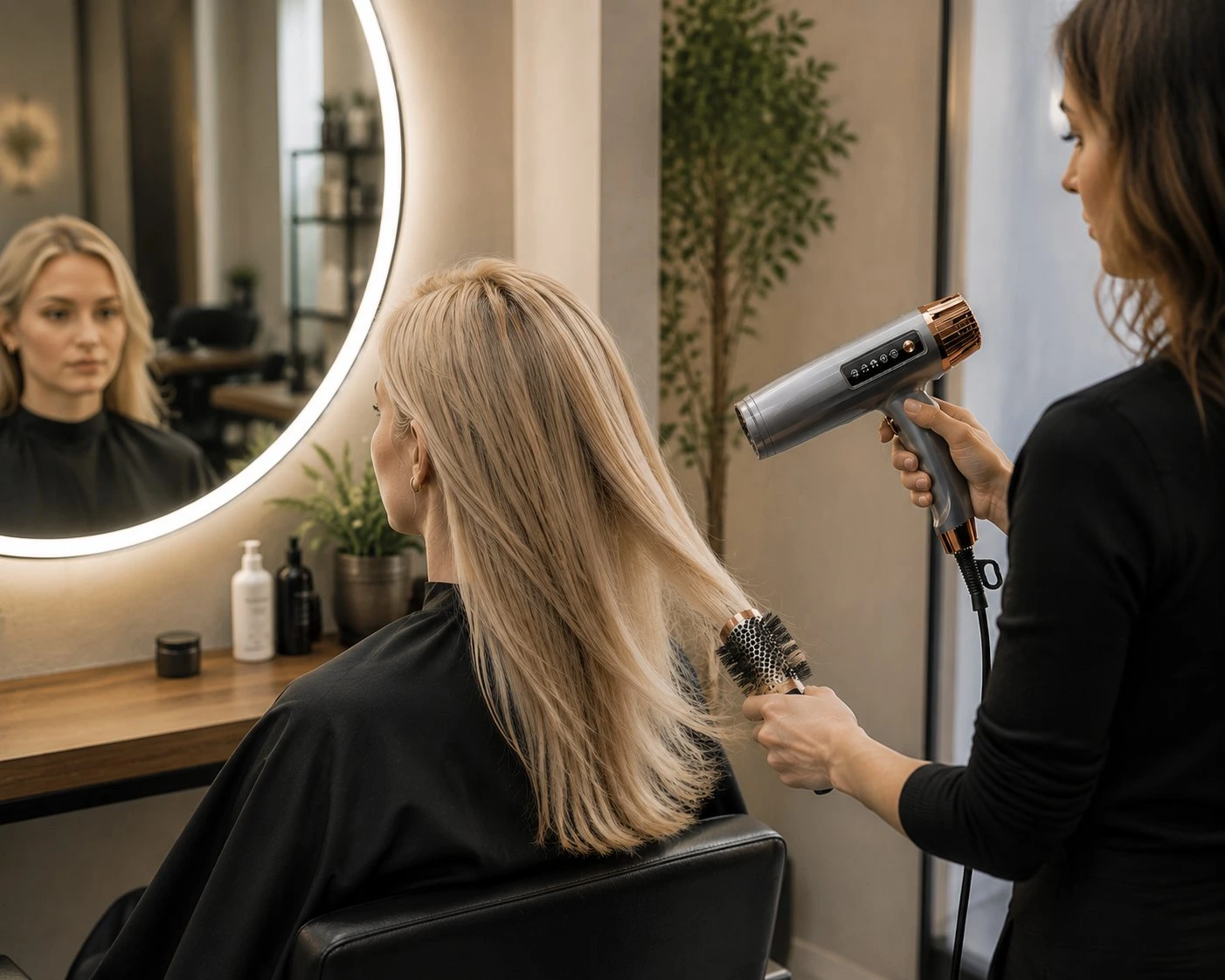
Link Beauty 2012 Large Power 2400W BLDC Blower for Professional Applications
The Link Beauty 2012 Large Power 2400W BLDC Blower combines high power output with BLDC motor technology for professional hair drying applications.
2400W Power Output for Professional Drying Requirements
The product features a 2400W power output, providing strong power capability for professional drying tasks.
For businesses selecting salon equipment, power output is one factor to consider alongside motor design, product structure, and intended application.
A Modern BLDC Hair Dryer Solution From Link Beauty
The 2012 Large Power 2400W BLDC Blower reflects Link Beauty’s approach to professional hair tools by combining motor technology with practical salon application requirements.
For buyers comparing different models, understanding how the product is designed for professional use can be more valuable than comparing individual specifications alone.
Link Beauty as a Professional Hair Dryer Manufacturer
As a professional hair dryer manufacturer, Link Beauty focuses on providing hair tool solutions for business customers.
For distributors, salon equipment suppliers, and companies looking for OEM cooperation, supplier selection usually involves several considerations:
- Product development capability
- Manufacturing process
- Communication efficiency
- Ability to meet specific requirements
A suitable manufacturing partner should understand not only how to produce a product, but also how the product will be used in real working environments.
How to Select a Reliable Salon Equipment Supplier
Finding a suitable salon equipment supplier requires looking beyond product catalogs.
Before cooperation, buyers often review:
- Available product range
- Manufacturing capability
- Customization options
- Communication process
For businesses building their own beauty equipment portfolio, working with a manufacturer that understands professional applications can make product development and cooperation smoother.
Link Beauty provides professional hair tool solutions for businesses looking for reliable manufacturing cooperation.
Conclusion
Choosing a professional high-speed BLDC hair dryer requires a balance between motor technology, power output, product design, and supplier capability.
Specifications such as wattage provide useful information, but they do not tell the complete story. The right product should match the actual working environment where it will be used.
The Link Beauty 2012 Large Power 2400W BLDC Blower combines 2400W power output with BLDC motor technology, providing a professional solution for businesses looking for advanced salon hair dryer products.
For companies searching for a professional hair dryer manufacturer or OEM partner, Link Beauty offers professional hair tool solutions designed around business requirements. Contact Link Beauty to discuss product cooperation, OEM projects, and customized solutions.
FAQs
Q1: What factors should buyers consider when choosing a professional hair dryer?
A: Buyers usually compare motor technology, power output, airflow performance, product design, and supplier capability. The best choice depends on the intended working environment and application requirements.
Q2: Is a BLDC hair dryer suitable for professional salon use?
A: A BLDC hair dryer can be a suitable option for professional applications because BLDC motor technology provides a modern motor structure with stable operation characteristics.
Q3: Does higher wattage always mean better hair dryer performance?
A: Not necessarily. Wattage is only one specification. Motor design, airflow performance, and product engineering also influence the actual working experience.
Q4: Why are high-speed hair dryers becoming popular in salons?
A: High-speed hair dryers can provide strong airflow performance and help improve drying efficiency during daily salon services.
Q5: How can businesses choose a professional hair dryer manufacturer?
A: Businesses should review the manufacturer’s product experience, production capability, communication process, and ability to support professional requirements before starting cooperation.