
Beyond Wattage: What Really Determines Hair Dryer Performance
When buyers compare a new hair dryer model, wattage is usually the first specification they check.
A 2400W dryer naturally attracts attention. It suggests strong power and provides an easy way to compare different products. However, wattage alone does not explain the complete drying experience.
During actual use, drying performance depends on several factors working together — airflow movement, motor efficiency, temperature stability, and product design.
A hair dryer can have high power but still deliver average results if the airflow system is not designed effectively. The way air moves through the hair determines how efficiently moisture is removed and how much control users have during styling.
This difference is often noticed after testing. A sample may look impressive during the first demonstration, but long-term feedback usually comes from daily operation. Users pay attention to whether the airflow remains stable, whether the tool feels comfortable during extended styling sessions, and whether the product maintains consistent quality after repeat orders.
This is one reason airflow efficiency has become a more important topic in professional hair tool development.

For companies sourcing a professional hair dryer, the decision is rarely based on one specification alone. Supplier experience, production consistency, customization capability, and communication during development also influence purchasing decisions.
The Link Beauty 2012 Large Power 2400W BLDC Blower was developed around this practical approach, combining BLDC motor technology with airflow-focused design to support efficient hair drying performance.
Airflow Efficiency Has Become More Important Than Heat Output Alone
Removing Moisture Requires More Than Higher Temperature
Heat plays an important role in drying hair, but airflow determines how efficiently moisture moves away.
When wet hair is exposed to warm air, the drying process depends on how quickly moisture can leave the hair surface. Increasing temperature without improving airflow does not always create better results.
This is why two dryers with similar wattage can provide different user experiences.
In daily styling work, especially with longer or thicker hair, airflow quality becomes easier to notice. Strong and stable airflow helps move moisture faster while giving better control during brushing and shaping.
A fast drying hair dryer is not simply a product that produces more heat. The relationship between airflow, motor performance, and temperature control has a direct effect on real-world results.
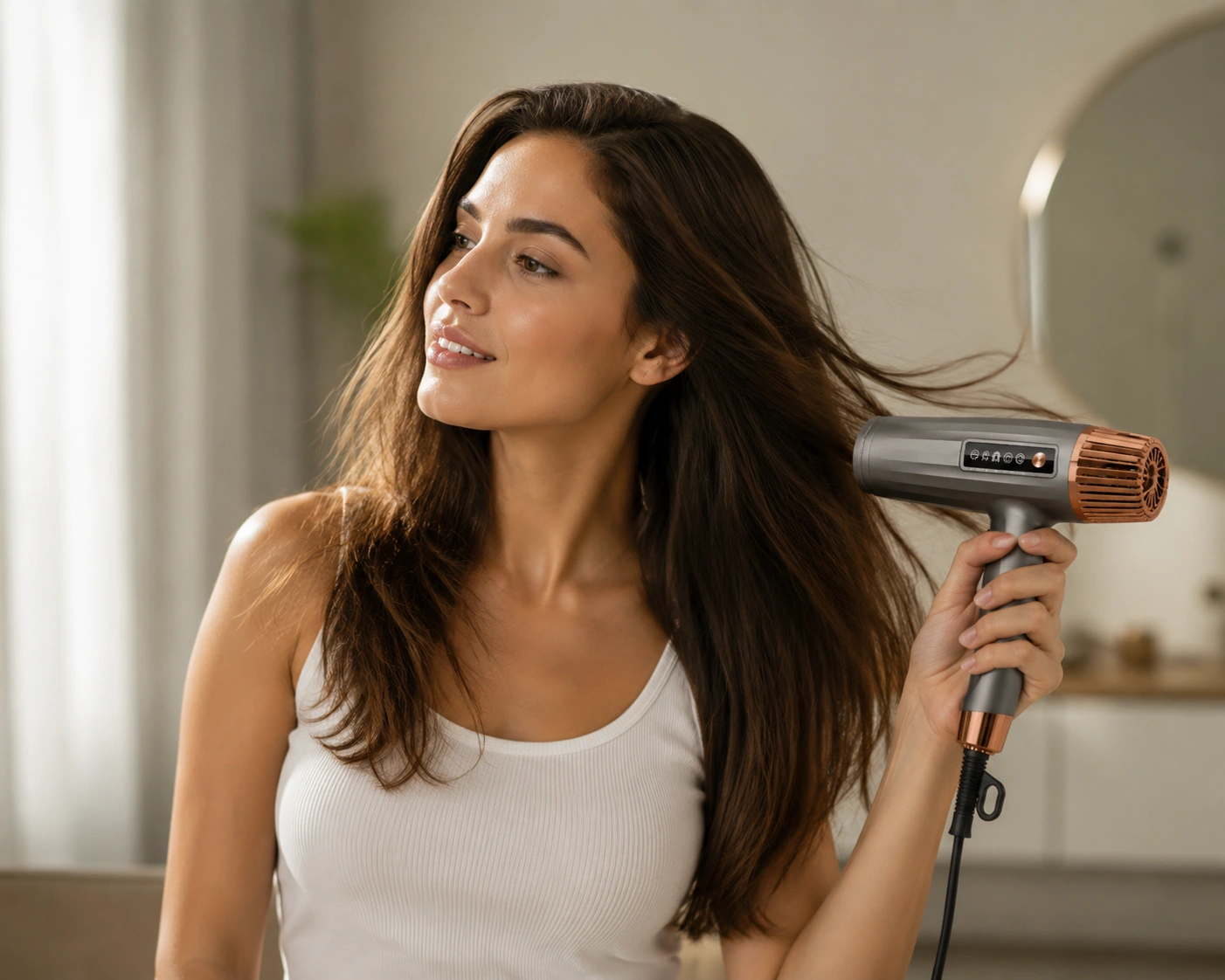
The Role of BLDC Motors in Modern Hair Dryer Design
Why Motor Selection Matters During Product Development
The motor is the core component that creates airflow inside a hair dryer.
Traditional motors have been used in hair tools for many years, but BLDC technology has provided manufacturers with more options when developing lighter products with stronger airflow capability.
A BLDC motor allows high-speed operation while maintaining a compact structure. This gives manufacturers more flexibility when balancing airflow output, product weight, and overall design.
The Link Beauty 2012 uses a 90,000RPM BLDC motor system.
The value of this technology is not only the rotation speed itself. More importantly, the motor supports stable airflow generation during continuous use and helps the product achieve efficient moisture removal.
For a hair dryer manufacturer, motor selection influences product development, airflow testing, design decisions, and customer expectations after launch.
Many buyers begin cooperation with sample testing. During this stage, they usually compare not only specifications but also actual operation, build quality, and whether the product matches their target market.
What Sample Testing Reveals About a Hair Dryer
Product Experience Often Determines Future Orders
Technical specifications provide important information, but sample testing usually reveals details that numbers cannot fully explain.
After receiving samples, buyers often evaluate:
- Airflow strength during operation
- Temperature consistency
- Weight balance
- Maintenance convenience
- Overall user experience
These details become especially relevant in professional styling environments.
In many European professional styling markets, tools are used continuously throughout the day. A lightweight design and stable airflow can influence how users feel about a product after weeks of operation.
The Link Beauty 2012 provides a wind speed of 22m/s ±1 and an air volume of 1.8m³/min, supporting efficient airflow during drying.
The 345g lightweight structure also helps improve handling comfort during detailed styling work.
A successful sample can create a business opportunity. Maintaining the same quality in later production batches is what usually determines whether cooperation continues.
For importers and distributors, consistency between the approved sample and future shipments is often one of the most important parts of supplier evaluation.
Design Details That Influence Product Acceptance
Performance Needs to Match Daily Working Conditions
Professional tools are judged by more than drying speed.
Small design details often become important after a product enters regular use.
Temperature stability is one example. The Link Beauty 2012 includes constant temperature control with a maximum temperature of 140±10℃, helping maintain a stable drying process.
The model also includes negative ion technology and a self-cleaning system, supporting daily maintenance and product usability.
These features are designed around practical working conditions rather than simply adding specifications to a product list.
For brands developing an OEM hair dryer range, details such as weight, handling comfort, maintenance design, and product reliability can influence customer feedback after launch.
A product needs to perform well, but it also needs to fit naturally into daily working routines.
What Companies Should Evaluate When Choosing a Hair Dryer Manufacturer
Production Capability Matters After the First Order
Choosing a supplier involves more than selecting a product with attractive specifications.
Many buyers evaluate the manufacturer behind the product before moving into long-term cooperation.
Common questions include:
- Can future batches maintain the same quality?
- Does the factory support customization?
- How are products tested before shipment?
- Can technical questions be handled efficiently?
- Does the supplier understand different market requirements?
The first shipment is important, but later shipments often provide a clearer picture of a supplier’s capability.
In export business, product consistency can directly affect customer satisfaction. A supplier that maintains stable production quality helps buyers reduce uncertainty when developing their own product lines.
For companies looking for a professional hair dryer supplier, manufacturing experience, communication efficiency, and customization support are important parts of the decision-making process.
What Matters When Expanding a Hair Tool Product Line
Choosing a Supplier Is About More Than One Product Model
When companies expand their hair tool categories, the decision usually involves more than selecting a product with attractive specifications.
Performance is important, but long-term cooperation often depends on several practical factors:
- Stable production quality
- Clear communication during development
- Flexible customization options
- Consistent support after order confirmation
In many cases, buyers begin with sample testing before moving into larger production runs. The experience during this stage helps determine whether a supplier is suitable for future cooperation.
A professional hair dryer supplier needs to understand both product engineering and market requirements. From motor selection to final production, each stage can influence how the product performs after reaching customers.
For brands working with an OEM hair dryer manufacturer, having a partner that can support product adjustments, packaging requirements, and production consistency can make the development process smoother.
Conclusion: Airflow Efficiency Is Becoming a Key Reference for Hair Dryer Selection
Hair dryer selection is no longer based only on wattage.
Power remains an important specification, but airflow efficiency, motor technology, temperature stability, and daily usability are becoming stronger factors during product evaluation.
A specification sheet shows what a product includes. Sample testing shows how those features work in real situations.
The Link Beauty 2012 Large Power 2400W BLDC Blower reflects this approach by combining high-speed BLDC motor technology, efficient airflow design, lightweight construction, and practical functions for professional hair drying applications.
As a professional hair tool manufacturer, Link Beauty supports global partners with product development, OEM/ODM customization, and manufacturing solutions based on different market requirements.
For businesses planning to expand their professional hair tool range, contact Link Beauty to discuss product development options, customization needs, and sample evaluation for future cooperation.
FAQ
What should buyers prepare before requesting a hair dryer quotation?
A: Buyers usually provide information about target markets, product specifications, customization requirements, packaging expectations, and estimated order quantities. Clear requirements help manufacturers recommend more suitable product options.
Why can two 2400W hair dryers have different drying results?
A: Wattage only represents power consumption. Actual drying performance also depends on airflow speed, air volume, motor design, and temperature control.
Why are more professional hair dryer brands choosing BLDC motor technology?
A: BLDC motors support high-speed operation and efficient airflow generation. They allow manufacturers to develop lighter hair dryers while maintaining strong drying capability.
What should buyers check when choosing a professional hair dryer supplier?
A: Buyers usually review product samples, production consistency, quality control procedures, customization capability, communication efficiency, and manufacturing experience before placing orders.
How can importers evaluate whether a hair dryer supplier is reliable?
A: Importers can review sample quality, factory capability, production processes, previous experience, and whether the supplier can maintain consistent quality during repeat orders.