Adding another hair tool to a range is easy. Giving that SKU a clear commercial reason to exist is harder.
A new dryer may look strong in a supplier catalogue yet overlap with a brush dryer or multi-styler already in the line. Problems often appear later: two SKUs compete for the same customer or compliance details force changes after sampling.
For distributors, private-label brands, retailers and salon suppliers, the hair dryer vs hair dryer brush decision is a range-planning question: what job does each product solve, and is the difference clear enough to sell?
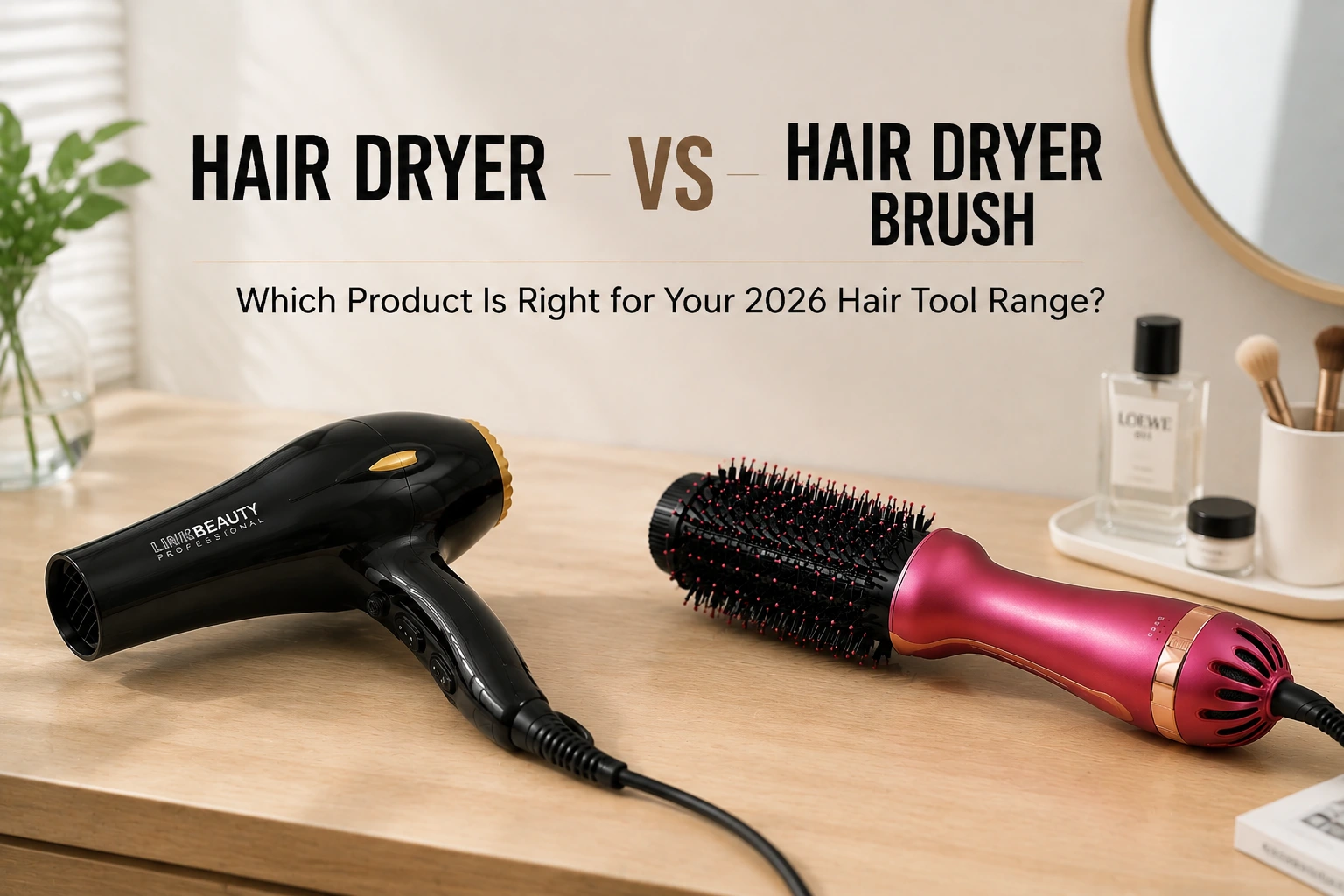
Hair Dryer vs Hair Dryer Brush: What Is the Real Difference?
Putting a brush on a dryer changes more than the shape of the appliance. It changes how the customer uses it.
A regular hair dryer lets the user decide what happens next. Hair can be rough-dried first, then worked with a round brush, paddle brush or another styling tool. With a hair dryer brush, the brush is already part of the process. Drying and shaping happen together.
That difference is small on a specification sheet, but much bigger when planning a product range.
A Regular Dryer Leaves More Room for Technique
A dryer is not tied to one brush size or one styling method. That makes it useful for everything from quick moisture removal to more detailed blow-dry work.
In salon use, this flexibility matters. One stylist may want strong airflow for the first drying stage, then lower heat and more control around the ends. Another may use a completely different brush.
This is also why wattage alone says very little about whether a dryer is right for a market. Voltage, airflow controls, heat settings, plug type, cord setup and handling all come into the decision.
A Dryer Brush Is About Fewer Steps
A hair dryer brush, often called a hot air brush or blow dryer brush, suits a different customer. The appeal is simple: one tool in the hand, rather than a dryer in one hand and a brush in the other.
That works well for smoothing, adding volume and shaping the ends. It can also make the category easier to sell to customers who do not want a salon-style blow-dry routine at home.
There is one practical point worth keeping in mind. Some brushes are designed for damp or wet-to-dry styling; others are better used after part of the moisture has already been removed. That depends on the model, not the category name.
From a range-planning point of view, the two products are easier to manage once they are treated as different tools rather than substitutes.
Where Each Product Fits Best in a Hair Tool Range
Once the functional difference is clear, the commercial split becomes easier to manage. A dryer fits customers who care about drying flexibility and direct airflow. A brush format is stronger when convenience and one-step styling lead the purchase.
Hair Dryers Work Well as Core Drying Products
Fast drying is easy to communicate. In a salon, time affects workflow; at home, someone with long or thick hair may simply want a faster routine.
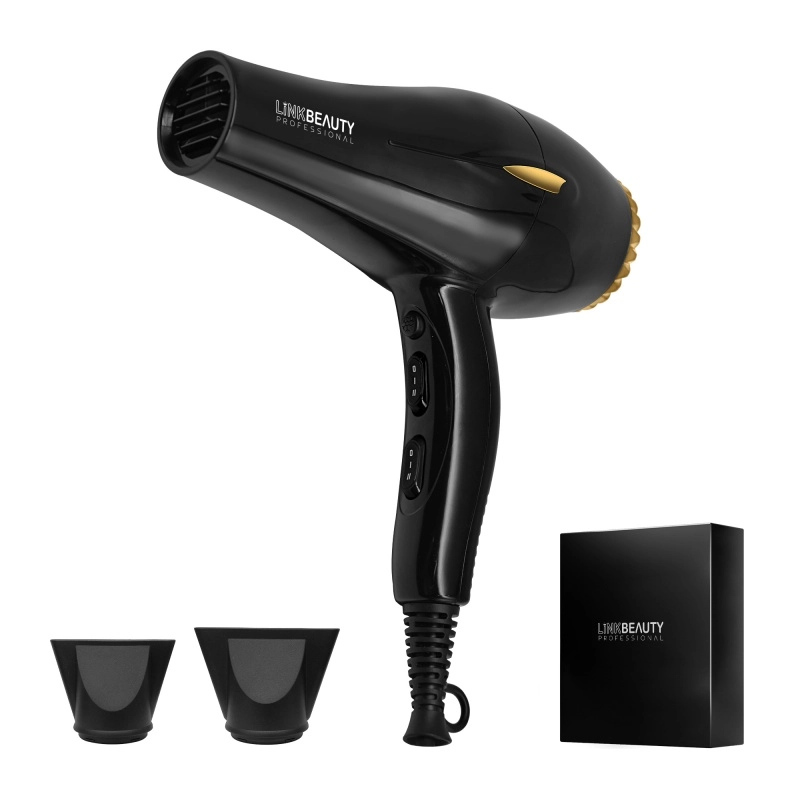
For brands building a high speed or fast drying hair dryer category, Link Beauty’s 2600W High Speed Ionic Hair Dryer has a clear role as a dedicated dryer. The product name provides the market story: 2600W power, high-speed drying and ionic technology.
Hair Dryer Brushes Sell Convenience and Shape
A hair dryer brush answers a different need: simpler smoothing and shaping without the coordination of a separate dryer and brush.
Link Beauty’s 6635S Dual-Brush Ionic Hot Air Brush gives the brush category a separate place in the styling range.
For a distributor, the distinction helps. The dryer leads with drying flexibility; the hot air brush leads with convenience, smoothing and shape. That separation becomes even more important as customers compare products across categories.
How Hair Tool Buying Is Changing in 2026
A search that starts with a traditional dryer can quickly move toward a brush dryer, compact high-speed model or multi-styler. Air-powered styling systems, including well-known products such as the Dyson Airwrap, have kept multi-function air styling highly visible in the market.
For B2B product planning, more formats do not automatically make a stronger assortment.
Air Styling Has Expanded What Customers Compare
A conventional dryer can focus on flexible drying. A hot air brush can focus on smoothing and volume. A multi-styler can serve customers who want several styling functions in one system.
Link Beauty’s 2 in 1 Hot Air Styler adds another air-styling format to that mix.
Clear SKU Roles Make the Range Easier to Sell
A practical assortment might use an ionic hair dryer as the main drying tool, a hot air brush for simplified styling, and a multi-styler for customers looking for more functions.
The mix depends on channel, target price and the existing portfolio. If a sales team needs a long explanation to justify why one SKU sits beside another, the customer may face the same confusion.
Hair Dryer vs Hair Dryer Brush: What Matters in B2B Evaluation?
Consumer reviews focus on styling results and ease of use. A sourcing decision also covers branding, packaging, compliance, production, shipment and repeat orders.
A sample can perform well on its own and still create problems later if the final market configuration has not been checked carefully.
Compare Performance With the Actual Use Case
| Buying Factor | Hair Dryer | Hair Dryer Brush |
| Primary role | Dedicated drying and blow-drying | Drying while brushing and shaping |
| Airflow use | Direct and flexible | Built around the brush head |
| User routine | Works with separate styling tools | One-hand styling |
| Best suited for | Drying flexibility and broader use | Smoothing, volume and convenience |
| Range position | Core hair-care appliance | Styling-led adjacent category |
A salon-focused appliance may face different expectations from a retail model designed for lighter home use.
Look Beyond Wattage and Appearance
OEM discussions often start with wattage, housing design, colour and target price. Many project delays come from less visible details.
Voltage and plug configuration affect market fit. Packaging, labels, manuals and compliance documents also need to match the final configuration.
A practical sourcing review covers:
- rated power and target voltage;
- airflow and temperature controls;
- plug and cord configuration;
- packaging and labelling;
- compliance requirements;
- approved-sample and bulk-production consistency.
For a broader sourcing checklist, Link Beauty’s guide on how to find a reliable hair dryer manufacturer covers the production and quality-control points that become important before a bulk order.
Where a 2600W High-Speed Ionic Dryer Fits in the Range
Once the category role and sourcing criteria are clear, the next question is what a specific high-power dryer is meant to do inside the assortment.
The 2600W High Speed Ionic Hair Dryer fits the dedicated-drying side of the range. It does not need to imitate a brush dryer or multi-styler to have a clear commercial role.
What Ionic Technology Adds to the Dryer Range
Ionic hair dryer is a familiar product term for trade buyers and consumers. Here, ionic technology works best as part of the broader dryer proposition rather than as a stand-alone promise.
Power, airflow, heat control and usability still shape the drying experience.
Manufacturing Matters Once the Sample Is Approved
A good sample is only the first stage of a B2B programme.
Link Beauty has 10 years of industry experience, provides OEM and ODM services, and operates an ISO 9001-certified factory. Its production and testing setup includes hair dryer aging tests, laboratory testing, plug-wire bending tests and simulated transportation vibration testing.
For sourcing teams, consistency is the practical issue: the approved configuration, labels, packaging and product quality need to stay aligned from samples to bulk quantities.
Conclusion
A hair dryer and a hair dryer brush may serve the same broad hair-care market, but they solve different problems. A dedicated dryer gives more freedom over airflow and styling technique, while a dryer brush appeals to customers who prefer a simpler way to dry, smooth and shape their hair.
For distributors and private-label brands, the better range is not necessarily the one with more SKUs. It is the one where each product has a reason to be there, without competing too heavily with the next item in the line.
For brands developing a high speed hair dryer or expanding a private-label hair tool range, Link Beauty offers OEM/ODM support for product configuration, branding and packaging. Explore the 2600W High Speed Ionic Hair Dryer or contact Link Beauty to discuss a new project.
FAQ
Q1: What is the main difference between a hair dryer and a hair dryer brush?
A: A hair dryer keeps the airflow separate from the brush, so the user has more choice in how to dry and style. A hair dryer brush combines both steps in one tool.
Q2: Can a hair dryer brush replace a regular hair dryer?
A: For some users, yes. It is handy for smoothing and volume. A regular dryer is more flexible for rough drying, very wet hair and different brush techniques.
Q3: Can a hair dryer brush be used on wet hair?
A: That depends on the model. Some are made for damp or wet-to-dry styling, while others are better used after the hair has been partly dried.
Q4: What needs checking before ordering a private label hair dryer?
A: The main points are power, voltage, airflow and heat controls, plug and cord setup, packaging, compliance, and whether bulk production matches the approved sample.