For salon brands, choosing a hair dryer manufacturer in 2026 is not only about comparing quotations. It affects product reviews, salon feedback, distributor confidence, and repeat orders. A dryer may look fine during sampling, but the real test begins after it is used many times a day in a professional salon.
That is where sourcing problems often appear. Airflow may feel different from the approved sample. A nozzle may loosen after repeated use. A rating label may need revision before shipment. A wrong plug type, missing carton mark, or unclear manual can slow down a distributor’s launch schedule. These details may look small at the factory stage, but they become costly once stock reaches the market.
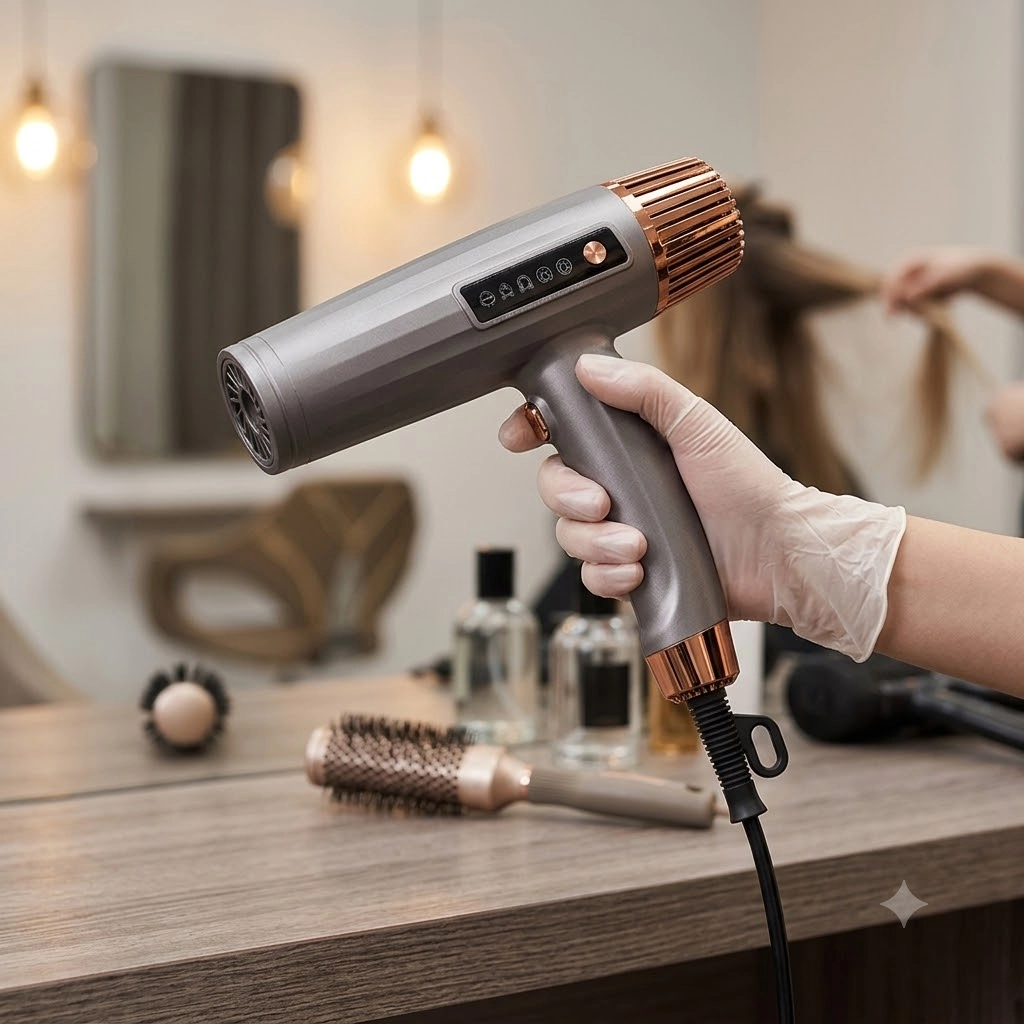
The right supplier keeps the approved sample, bulk production, packaging, and shipment details aligned. Link Beauty’s 2012(Large Power 2400W BLDC Blower) is used in this article as a product reference for evaluating professional BLDC hair dryer projects.
Why Reliability Matters More Than a Low Quote
A low unit price can make a project look attractive at the beginning. In B2B salon supply, however, the cheapest offer is not always the safest one. If bulk quality changes, packaging looks inconsistent, or after-sales complaints rise, the real cost becomes much higher than the original quotation.
For salon brand buyers, reliability usually appears in practical details:
- Bulk quality matches the approved sample
- Packaging, labels, and documents are prepared correctly
- Product performance holds up during salon trial use
A professional hair dryer manufacturer should be judged by how well these details are handled. Price still matters, but for a salon hair dryer line, stable production and clear project follow-up often carry more value than a small price difference.
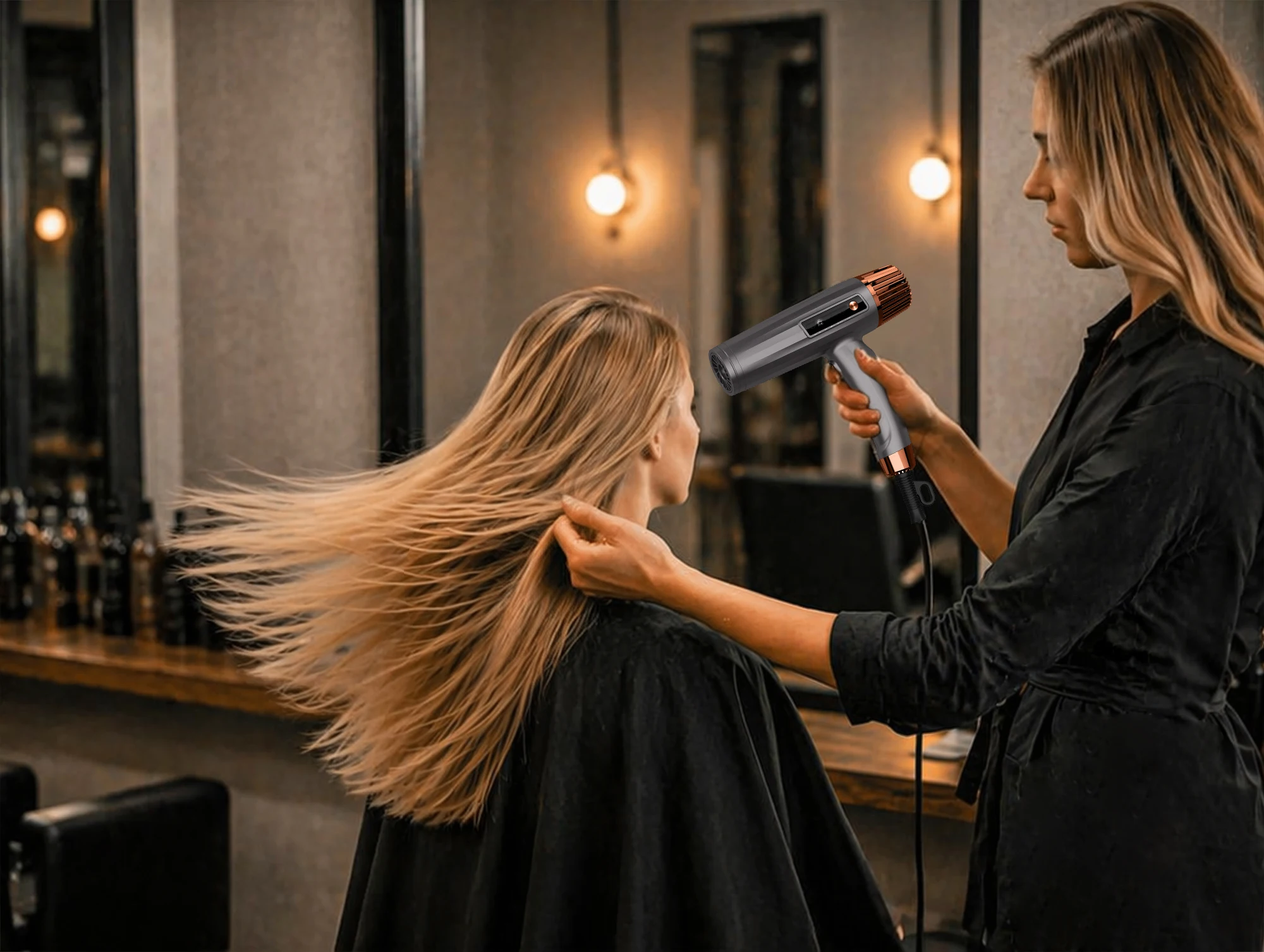
A salon floor is not gentle. Tools are picked up, put down, cleaned quickly, and used by different stylists throughout the day. A dryer that passes a short office demo may still need a real salon trial before bulk orders are confirmed.
Match the Dryer to Professional Salon Use
Professional salons usually need more than basic drying power. Stylists care about drying speed, but also about hand feel, heat comfort, noise, balance, and finishing results. Clients may not read the specifications, but they notice whether the service feels smooth and comfortable.
This is why product positioning should come before bulk pricing. A salon brand selling into professional channels needs a dryer that fits daily service use, retail presentation, and distributor expectations. A basic retail model may not fit, even if the wattage looks acceptable on paper.
For buyers comparing samples, the question is not simply “How powerful is it?” A better question is whether the motor, airflow, temperature, weight, and maintenance design work together in real salon use. Product data is useful only when it supports that judgment.
Product Reference for Buyer Review
| Buyer Checkpoint | What to Review | 2012 Model Reference |
| Drying performance | Motor type, speed, wind speed, and air volume | φ32 BLDC motor, 90,000RPM, 22m/s ±1 wind speed, 1.8m³/min air volume |
| Salon handling | Weight and noise during repeated use | 345g body, 74dB ±1 noise level |
| Market fit | Voltage range for target channels | 220V–240V, 50–60Hz |
| Hair finish | Static and frizz control support | Negative ion output ≥5000×10⁶ ions/cm³ |
| Maintenance | Internal cleaning support | Self-cleaning system |
| Heat performance | Maximum temperature range | 140±10℃ |
This kind of table is more useful than a long specification list. It connects product data with the way procurement teams and salon testers actually review a sample.
Test the Sample Like a Salon Tool, Not a Retail Gadget
Check Airflow and Heat Stability Together
The BLDC hair dryer category is widely used in professional channels because it can combine high-speed airflow with a lighter structure. For buyer evaluation, airflow should be tested together with heat comfort and hand feel.
In the 2012 model, the BLDC motor, 90,000RPM speed, and 22m/s ±1 wind speed give buyers measurable points to check during a salon trial. For a deeper look at 2400W brushless motor hair dryers, buyers can review how motor speed, airflow, and salon-use efficiency are evaluated in B2B sourcing. Drying speed matters, but heat should also feel controlled across different hair types.
Review Handling Comfort During Salon Trials
Weight and balance are easy to overlook during a quick sample review. In actual salon use, they matter. A stylist may hold the dryer for long blowouts, quick finishing work, or repeated services during a full day.
A 345g body gives this BLDC dryer a clear handling point for salon testing. Noise should be reviewed in the same setting. A dryer works close to the client’s ear, and harsh sound can affect the service atmosphere. The listed 74dB ±1 noise level gives buyers a reference point, but real room testing is still valuable.
Look at Hair Finish and Maintenance Details
Hair finish is part of the service experience. The negative ion function in this product can be described as helping reduce static and frizz while supporting a smoother-looking finish. The wording should stay practical, not overpromised.
Maintenance is also a real B2B concern. Hair dust and debris can build up inside dryers used in salons. A self-cleaning system may help reduce routine maintenance pressure and make the product easier to manage after sale. It is not the flashiest feature, but distributors and salon managers often care about these quiet details after the first batch is sold.
Why OEM/ODM and Export Experience Matter in B2B Orders
In private-label projects, the dryer is only one part of the order. Logo placement, housing color, surface finish, gift box design, user manual, rating label, carton marks, voltage, plug type, and accessory matching all affect market readiness.
Link Beauty is positioned as a manufacturer and exporter of electric hair styling tools for professional salons and home use. The company provides OEM/ODM service for global buyers. Its factory information includes ISO9001 certification, around 300 staff, and daily production capacity of 5,000–8,000 units. Link Beauty also lists certifications including CE, FCC, RoHS, PSE, SAA, GCC, and cETLus.
For buyers, this matters because a strong product sample still needs factory capacity, testing routines, and export follow-up to support repeat orders. A missing document, wrong label, mismatched plug, or unclear packaging mark can create launch delays. A manufacturer/exporter with regular international project experience is usually better prepared for these steps.
Quality Control Points Before Bulk Orders
Before placing a large order with any hair dryer manufacturer, quality control should be discussed in detail. A general promise of “good quality” is not enough for salon-brand procurement.
Key checkpoints may include:
- Approved sample kept as the production reference
- Pre-production sample confirmation
- Motor and airflow testing
- Temperature and function testing
- Aging test before shipment
- Packaging and carton inspection
- Final inspection report before delivery
For a professional salon hair dryer project, inspection should focus on airflow, heat stability, noise, weight, negative ion function, self-cleaning performance, nozzle fit, button feel, and body finish. These are the details that buyers, distributors, and salon testers are most likely to notice.
Once packaging, shipment dates, and distributor launch plans are fixed, late-stage corrections become much harder. Clear quality control before bulk production helps reduce that risk.
Conclusion
Finding a reliable hair dryer manufacturer in 2026 means looking beyond price and simple online rankings. For salon brands, the better choice is a supplier that can connect product performance, consistent manufacturing, OEM/ODM service, export experience, and practical quality control.
With the 2012 BLDC hair dryer as one product reference, Link Beauty shows how professional salon performance, customization support, and export-ready manufacturing can work together in one sourcing project. For brands planning a new BLDC hair dryer line or upgrading an existing salon hair dryer range, Link Beauty can support product selection, OEM/ODM discussion, sample review, and B2B manufacturing cooperation.
FAQ
Q1: Can Link Beauty customize a BLDC hair dryer for private-label salon brands?
A: Yes. Link Beauty provides OEM/ODM service for global buyers. Custom project details may include logo placement, color direction, packaging, manuals, plug type, voltage requirements, and accessory matching.
Q2: What should buyers confirm before requesting a sample?
A: Buyers should confirm the target market, voltage, plug type, packaging style, logo requirements, certification needs, sample quantity, testing focus, and expected order plan before requesting a sample from a hair dryer manufacturer.
Q3: What MOQ and lead time details should buyers discuss with a hair dryer manufacturer?
A: Buyers should discuss sample quantity, trial order quantity, bulk order MOQ, production lead time, packaging schedule, inspection timing, and shipment plan before confirming a project. These details help avoid delays between sample approval and mass production.
Q4: What should be tested during a salon trial?
A: Buyers should test airflow strength, drying speed, heat comfort, weight balance, noise level, nozzle fit, button operation, body finish, and performance after repeated use.
Q5: How can buyers reduce risk before bulk production?
A: Buyers can reduce risk by approving a final sample, confirming packaging and labels, reviewing required certifications, checking inspection standards, and requesting clear shipment documents before bulk production starts.