
A hair dryer sample should answer a purchasing question, not merely confirm that the unit switches on. Before a bulk order, the buyer needs to know whether the sample matches the approved specification, performs consistently under the intended use conditions, and can be described accurately to retailers or end users.
A practical hair dryer sample evaluation checklist therefore covers electrical details, airflow, heat, controls, handling, noise, attachments, packaging, documentation, and the feedback record that connects approval to the final order.
This process is useful for importers, distributors, salon-equipment buyers, and private-label teams. It also helps separate two decisions that are often confused: whether the product concept is attractive, and whether the specific supplier sample is ready to move toward bulk-order discussion. The checklist below is a decision framework, not a substitute for market-specific legal, safety, or compliance review.
Start With the Approved Product Brief
Sample review is only meaningful when the buyer has something specific to compare. Before testing, record the model number, target market, intended channel, rated voltage and frequency, plug requirement, power, motor type, controls, accessories, cord, packaging direction, and any approved branding. If these details are still open, label them as open decisions instead of treating the first sample as the final commercial version.
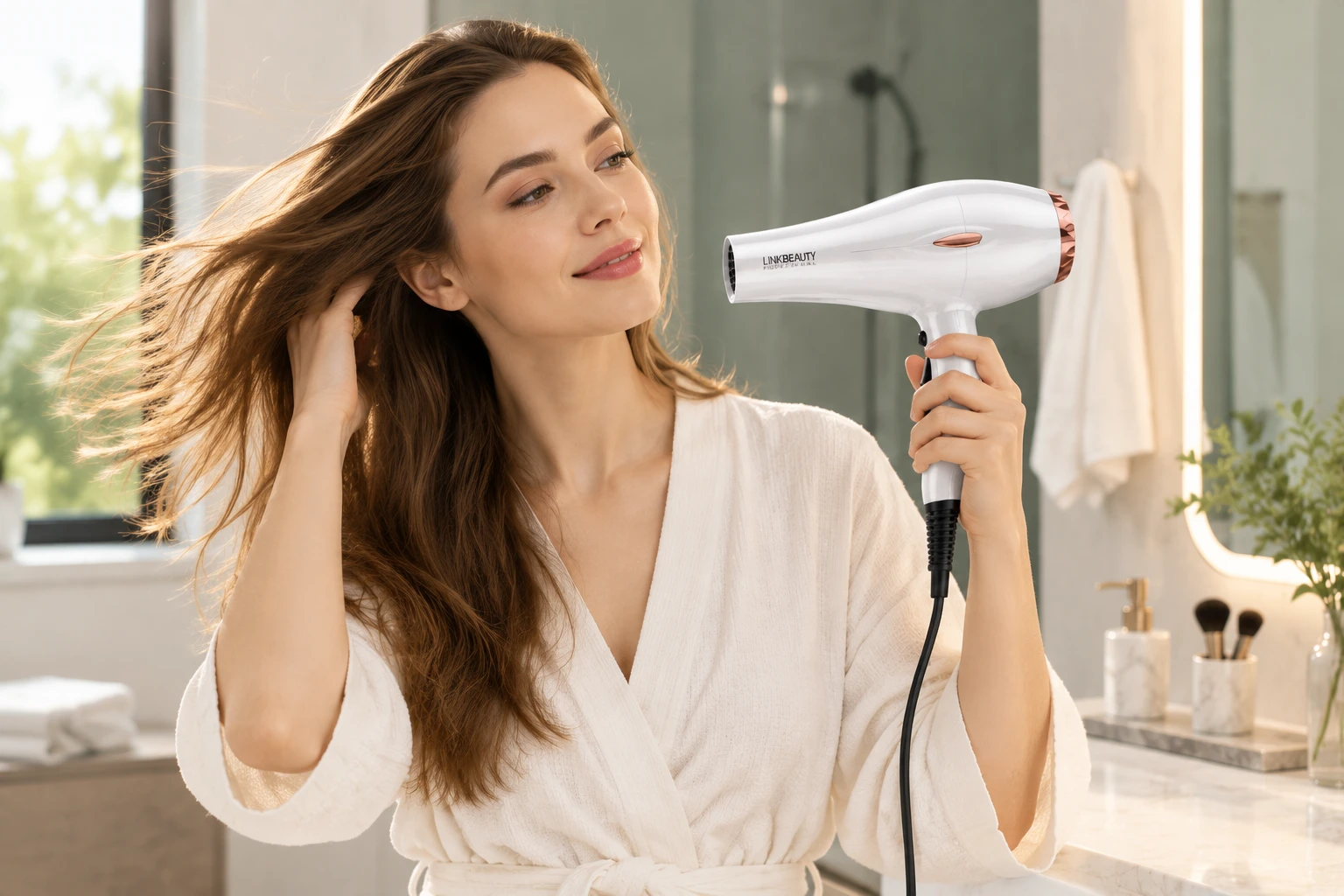
For example, the Link Beauty 2600 model combines 2600W power, an AC motor, three speed settings, an instant cold-shot button, 297g weight, noise below 78dB, ionic function, auto self-clean, two nozzles, one diffuser, and a 3-metre or customised cord. A buyer can use this 2600W hair dryer specification reference as a starting comparison record, while still confirming the exact quoted version and sample condition.
The Hair Dryer Sample Evaluation Checklist
1. Verify the Identity and Electrical Version
Check that the sample model, rating label, quotation, carton marking, and specification sheet refer to the same version. Confirm voltage, frequency, plug, cord, power, and any market-specific label requirements.
Do not rely on a product photograph or a general catalogue description when the order will be shipped into a different electrical market. Record photographs or document references in the buyer’s internal approval file if the project process permits.
2. Test the Controls and Operating Sequence
Operate every speed and heat control, the cold-shot button, and any self-clean or other named function included in the approved brief. Note whether the switch positions are clear, whether controls can be changed during use, and whether the printed labels match the actual sequence. A control that works technically but is difficult to explain may create retailer training or customer-service friction later.
3. Observe Airflow and Heat Behaviour
Evaluate airflow direction, stability, heat consistency, cool-shot response, and the way the dryer behaves across the intended styling routine. Use a repeatable test method: the same starting condition, section size, mode, duration, and observation notes for each sample.
Avoid converting one informal impression into a guaranteed drying-time claim. The purpose is to compare samples and identify questions that need supplier clarification or a defined test method.
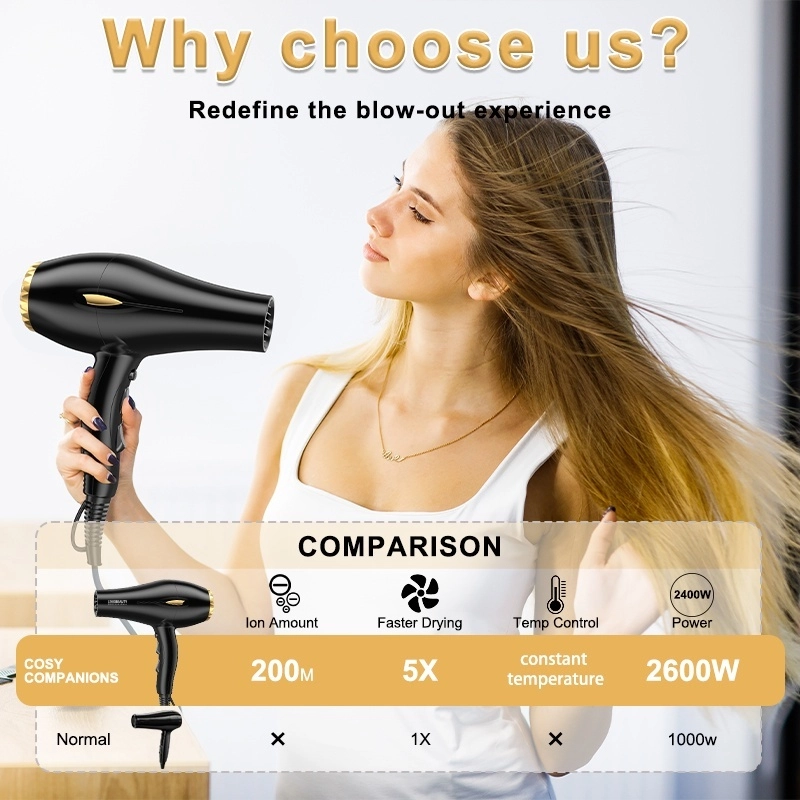
4. Check Handling, Weight, and Noise
Hold the dryer through a realistic session rather than judging comfort from a brief lift. Review balance, grip, button placement, cord movement, heat around the housing, and fatigue points.
Noise should also be recorded under a consistent method if it is a commercial requirement. A published dB value is not a complete description of perceived salon noise, so note the measurement conditions and avoid promising a quiet experience without evidence.
5. Inspect Attachments and Fit
Confirm that every nozzle, diffuser, concentrator, or other accessory named in the brief is present, fits securely, and can be removed without damaging the housing. Check whether the accessory set changes the carton size or requires a separate insert. Retail listings, packing lists, and customer support scripts should use the same accessory names and quantities as the approved sample.
6. Review the Housing, Cord, and Finish
Inspect seams, buttons, air inlets, strain relief, cord routing, surface finish, labels, and visible marks. This is not a replacement for formal laboratory or safety testing. It is a practical screen for obvious build, assembly, or presentation issues that can affect a buyer’s decision or trigger rework before artwork and production. Photograph any issue and identify whether it is a sample defect, an approved design feature, or an open correction.
7. Match Packaging and Documents to the SKU
Review the gift box or retail pack, model name, rating information, accessory count, instruction language, warnings, and carton marks against the project brief. A visually correct sample can still be commercially unready if the packaging describes another voltage, omits a required accessory, or uses a product name that does not match the range. Keep packaging approval separate from performance approval, then record both decisions in the same project file.
Turn Observations Into an Approval Record
A useful sample report does not need to be complicated. For each checkpoint, record the requirement, observed result, evidence, status, owner, and next action. Use clear statuses such as approved, approved with correction, retest required, or not evaluated. The last label matters: if the buyer did not measure a value or receive a document, it should remain open rather than being guessed or silently treated as passed.
| Checkpoint | What to record | Decision question |
|---|---|---|
| Electrical version | Voltage, frequency, plug, cord, rating label | Does the sample match the target market brief? |
| Function | Speed, heat, cold shot, named functions | Does the operating sequence match the listing and manual? |
| Performance | Airflow, heat behaviour, repeatability | Does the sample support the intended product role? |
| Handling | Weight, balance, grip, controls, noise notes | Can the target user handle it comfortably? |
| Accessories | Presence, fit, names, quantities | Will the retail and carton content be accurate? |
| Packaging | Model, label, language, carton direction | Can artwork move forward without version conflict? |
Ask What Can Be Tested and Recorded
Link Beauty describes product R&D, PCBA production, production-line testing, hair dryer aging tests, laboratory testing, plug-wire bending testing, and simulated transportation vibration equipment.
Ask which checks apply to the quoted version, what evidence can be shared, and which requirements must be written into the project plan. The Link Beauty factory and testing information gives buyers a starting point for that discussion.
A good supplier conversation also separates three layers: the factory capability, the test method, and the acceptance requirement. For example, “aging test available” is not the same as an agreed aging duration and pass condition. “Laboratory testing” is not the same as a market-specific compliance file.
Keep those distinctions visible so the sample report remains useful to procurement, quality, packaging, and regulatory colleagues.
Use the Checklist for Product-Line Decisions
Sample approval should answer whether this model belongs in the intended range. Compare the observed product with the role written in the brief: salon professional, general retail, premium home use, travel, or another defined channel.
If the sample meets the technical requirements but the weight, noise, attachments, packaging, or customer explanation do not fit, the right outcome may be a model change rather than a cosmetic correction.
Buyers can also compare the hair dryer range to decide whether an adjacent model better matches the SKU architecture. This protects the project from a common failure mode: approving a sample because it has attractive specifications, then discovering that it duplicates another product or cannot be positioned clearly at retail.
When to Hold, Retest, or Reject a Sample
Hold the sample when a key fact is missing, such as the correct electrical version, accessory set, rating label, or approved packaging direction. Retest when the method was inconsistent or the observed result conflicts with the written specification.
Reject or reopen the product choice when the model cannot meet the core user scenario, cannot be described accurately, or would require changes that alter the product role rather than simply correcting a detail.
Do not hide an unresolved issue inside a general “quality is acceptable” note. A clear exception list gives the supplier a workable correction brief and gives the buyer a defensible reason for the next decision. It also reduces the risk of approving one sample while production follows a different version.
Convert Approval Notes Into an RFQ
Once the sample decision is clear, send the supplier a structured summary: approved model, target market, quantity range, electrical version, branding, packaging, accessory requirements, open corrections, documents needed, and the next sample or production gate. You can send a structured sample enquiry with the test notes attached or summarised in the message.
Conclusion
The best hair dryer sample evaluation checklist connects a physical product to a commercial decision. It verifies identity and electrical version, tests the controls and operating behaviour, reviews handling and noise, checks accessories and packaging, and records what is approved, what needs correction, and what remains not evaluated. That process gives buyers better information before a bulk order and gives suppliers a clearer correction brief.
For importers and private-label teams, the next step is not simply to request a lower quote. It is to send the approved product role and sample findings together, then ask the supplier to confirm the exact version, testing scope, documentation, and remaining project conditions. A disciplined sample record turns a promising hair dryer into a more controlled procurement decision.
FAQ
What should be tested first on a hair dryer sample?
Start with identity and electrical version, then check the controls, airflow, heat, cold shot, handling, noise, and accessories. If the sample does not match the model or market brief, performance observations may not apply to the version that would actually be ordered.
How many hair dryer samples should a buyer evaluate?
There is no universal number. The buyer should define the sample purpose, compare any competing models or versions under the same method, and request additional samples when the first unit leaves a material question unresolved. The important control is a consistent approval record, not an arbitrary sample count.
Should buyers test noise with a decibel meter?
A meter can be useful when noise is a defined product requirement, but the method must be consistent: distance, room conditions, operating mode, and measurement point all affect the result. A single informal reading should not become a guaranteed product claim without an agreed method and evidence.
What is the difference between a sample approval and a compliance review?
Sample approval checks whether the physical unit matches the commercial and technical brief. A compliance review checks the legal, safety, documentation, and market obligations for the destination. The two processes support each other, but passing one does not automatically prove that the other is complete.
What information should be included when asking Link Beauty about a sample?
Include the model or product direction, target market, quantity range, voltage and plug requirement, branding and packaging needs, accessory expectations, sample purpose, and the points that need to be tested or documented. A focused brief allows Link Beauty to respond to the actual project conditions rather than a generic product request.