
Buying a dual-voltage model does not settle which version goes into the carton. In a dual voltage hair dryer wholesale brief, the destination and plug assembly belong beside the model and input rating. Controls, pack contents, and the documents needed for approval complete the description. Branding can then be quoted against a product that has actually been defined.
The difficulty appears when one model is ordered for more than one market. A distributor may want a U.S. retail version now and a U.K. version later, both carrying the same brand. That does not make them one stock item. Separate order lines leave space for the plug, instructions, barcode, and quantity decisions that still have to be made.
The voltage range leaves part of the specification open
At the quotation stage, the phrase dual voltage leaves a question unanswered: how does the selected unit handle voltage selection? Automatic operation and a manual selector call for different instructions. The supplier’s response needs to name the arrangement for the quoted model, with the input rating alongside it. That answer can then be carried into the sample request.
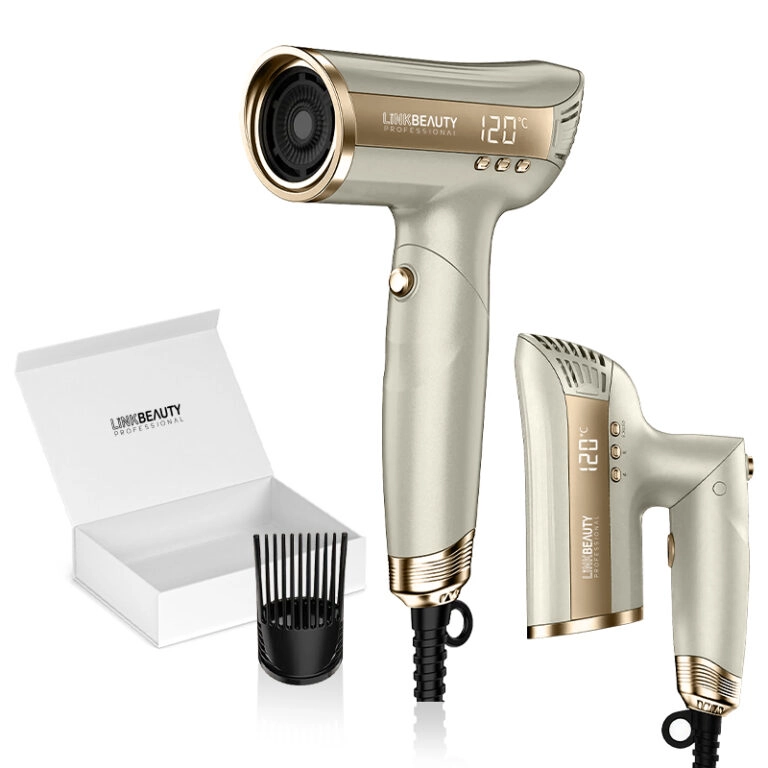
The MLB01 dual voltage hair dryer from Link Beauty has a stated input of 100–240V, 50/60Hz, and a 1200W rating. That is a specific electrical starting point for a multi-market order. The quotation still needs to identify the supplied version and explain its operation under the intended supply conditions. A buyer can use that response to settle the retail description before artwork is released.
A familiar plug shape can be misleading during sourcing. An adapter may allow a connection to an outlet without changing the supply voltage that reaches the appliance. The buyer therefore needs the dryer’s input rating, not just a plug description. The same caution applies when two products share a housing: their electrical assemblies still need to be identified separately.
Separate versions in a dual voltage hair dryer wholesale order
At the warehouse, the distinction is simple: which carton goes to which customer? If both cartons carry the same model number but contain different approved plugs, the model number will not answer it. A separate stock-keeping unit, or SKU, may be needed. The same reasoning can apply to an instruction language or retailer-specific pack.
| Order line | Decision to record |
| Destination and channel | Country, retailer, intended customer |
| Electrical version | Rated input, plug and cord, switching method |
| Retail contents | Accessories, instructions, packaging and barcode |
| Quantity | Units allocated to that exact version |
For the distributor planning U.S. sales first and U.K. sales later, the quantity forecast can be divided into two lines. The first line can be worked through without presenting the later forecast as a settled specification. A response on price and minimum quantity is needed for each line, or an explicit agreement that shared terms apply to both.
The hair dryer range is useful if the buying brief points to a different model altogether. That is a fresh selection decision, with a fresh electrical check. A familiar body shape does not transfer MLB01’s input rating to another appliance. Nor does a higher wattage answer whether the alternative meets the destination requirement.
Version identification belongs on the artwork agenda before printing. A distribution team may choose a separate barcode, a version panel, or another reference that works in its stock system. Whatever the choice, the carton has to make the approved distinction visible. Revising a stock file later will not fix a printed pack that leaves that distinction unclear.
The sample needs to answer the electrical brief
Sample approval is less useful when the purpose is left unstated. In this case, the question is how the selected version operates under the approved supply conditions. The supplier or qualified test provider can set out the method. A written result identifying the unit, conditions, and modes can then be reviewed by someone who was not present at the demonstration.
On MLB01, the control discussion covers three wind speeds, five temperature settings, and a sensor that adjusts temperature and airflow with distance. Manual selection and sensor response therefore deserve separate explanations. A sample demonstration can establish how those functions interact on the approved unit. Retailer training can then describe the sequence, rather than suggesting that a selected temperature is a measured result at the hair.

The hair dryer sample evaluation checklist can carry the wider review of handling, accessories, and finish. Keeping that review distinct helps the approval record stay precise. A comfortable grip, for example, answers a handling question; it leaves any unresolved voltage or plug questions exactly where they were.
A drying-time claim needs a drying test behind it. An RPM figure is a different measurement. Likewise, an airflow or temperature result means little without the operating mode and measuring position. Those details let the buying team interpret the report and decide which claims it supports. Electrical-safety work, including checks inside the appliance, remains with qualified personnel using suitable equipment.
U.S. protection requirements need a separate answer
For U.S. sales, immersion protection is a purchasing checkpoint in its own right. The CPSC guidance on hand-supported hair dryers identifies dryers lacking integral immersion protection as a substantial product hazard. A dual-voltage rating does not answer that issue. The importer needs the protection arrangement and supporting information for the actual appliance being considered.
Plug photographs and a successful operating demonstration can help with identification, but neither closes the compliance review. The reviewer needs the exact model and relevant component details. CPSC draws a legal distinction here as well: the section 15(j) hazard rule does not itself trigger section 14(a) testing or certification under the CPSA. That point prevents the sourcing brief from misstating the rule.
Keep approval useful after the sample stage
The handover to production is where a clear sample record earns its value. A file containing the model, electrical version, artwork revision, and packing instruction identifies the accepted arrangement. If a substitute plug is proposed, the technical reviewer can work from that file. The question is whether the changed assembly remains acceptable, not whether its housing still resembles the sample.
Link Beauty’s manufacturing and testing information is a starting point for discussing available checks and records. The order discussion then needs a narrower answer about the selected model, test scope, and evidence to be supplied. A general factory capability does not specify the acceptance conditions for an individual purchase order.
A technical change can reach the artwork team before anyone notices its packaging effect. Naming a technical contact and an artwork approver in the order record gives the supplier two clear responsibilities to route. Any required review can be completed against the affected version. The next order then has a current reference instead of an assumption that the earlier sample still covers it.
Prepare a quotation that separates the versions
For MLB01, Link Beauty accepts wholesale, OEM, and private-label inquiries, with custom color and branding available for discussion. An inquiry is more useful when the destination and quantity split accompany those preferences. It gives the response a clear base model and separates the desired appearance from the electrical assembly and supplied pack. Each part can then receive its own answer before the complete order is approved.
- Model and intended sales channels, with quantities by version
- Electrical details and unresolved technical questions
- Branding, pack contents, languages, and version identification
- Sample purpose, planned timing, and documents needed for approval
The Link Beauty contact team can receive that version brief together with the request for pricing, minimum quantities, samples, and lead time. An undecided item is best left as a named quotation question. Putting it into a purchase order as if already agreed makes the eventual response harder to use.
Price comparisons become clearer when the quotation separates the work included. A branded retail pack and a different accessory selection may account for part of a price difference between dual voltage hair dryer suppliers. The comparison can then be made on a matching configuration. Keeping the accepted revision with the order avoids having to piece the agreement back together from emails.
Conclusion
A dual voltage hair dryer wholesale project becomes manageable when the platform and each sellable version have clear identities. The voltage range starts the discussion. Switching behavior, the plug and cord, operating evidence, and market requirements complete the electrical decision. Packaging and quantity allocations turn that decision into stock that can be ordered and identified.
An MLB01 quotation can bring the remaining questions into one place: destination versions, sample arrangements, quantities, and commercial terms. Link Beauty can respond against that brief while undecided requirements remain identifiable. After agreement, the same reference can be passed to artwork and stock teams and retained for repeat purchasing. That is the practical value of specifying the version, not just choosing the model.
FAQ
Does 100–240V mean voltage switching is automatic?
No. The printed range and the selection mechanism answer different questions. A supplier response identifying the mechanism is needed for the quoted unit. Automatic selection can be described only after that arrangement is confirmed; where a manual step is involved, the operating instructions need to explain that step.
Can one dual-voltage model use the same SKU in every market?
Possibly, if one stock reference still identifies the item correctly for every customer. A version with a different plug or instruction pack may need its own SKU. This is a decision about how finished stock is ordered and picked; a common electrical platform does not make those pack differences disappear.
What happens if a plug changes after sample approval?
The proposed assembly goes back to the technical reviewer. A plug change may affect the supporting evidence, sample, label, or instructions, so the answer needs to be recorded for the revised version. Production can then use that decision. The shape of the housing does not determine whether earlier approval still applies.