The first question about a heated round brush MOQ is what happens when the order contains more than one size. Can the quantities be added together, or does each version need to meet a separate minimum? The answer belongs in the quotation before the order total is chosen. Logo work and printed boxes may have different quantity conditions, so the offer needs to identify those commitments as well.
A new private-label line may have no sales history to work from. In that situation, a retailer’s written opening order deserves a different status from projected online sales. The purchasing file can show both, with a clear distinction between stock already allocated to a customer and stock that still needs to find a buyer.
Establish the Basis of the Minimum Order
An inquiry for “mixed sizes with a custom logo” leaves several questions unanswered. The reply needs to cover the brushes, the requested branding and the retail pack. Otherwise, the buyer may receive a number without enough detail to decide whether the proposed order meets it.
Minimum Quantity by Configuration
What does the word “model” cover in the offer? It could refer to one selected version rather than everything sold under the same family name. The buying team needs the requested variations named on the quote, together with a written answer on how they count toward the minimum. Each line can then be checked before the purchase is approved.
There is also a difference between combining goods in one shipment and combining quantities to meet a production minimum. The first concerns delivery; the second concerns the commercial offer. A supplier can answer both in the same quotation, but permission for one should not be read as permission for the other.
Packaging Quantities and Unused Stock
The packaging line needs a quantity of its own. If more boxes are being purchased than brushes, the remainder should appear in the commercial discussion: its ownership, cost and proposed storage all need agreement. There is also a practical question for a future order. Will that artwork still describe the version the brand intends to sell?
Give Each Selected M5002 Size an Order Line
The M5002 thermal hair brush from Link Beauty is available in 32mm, 38mm and 45mm sizes. Their respective power ratings are 60W, 70W and 90W. Those pairs belong together in the buying record: a change of diameter also changes the rated-power entry, even though the products share the M5002 name. A single line for assorted M5002 brushes would leave that allocation unresolved.
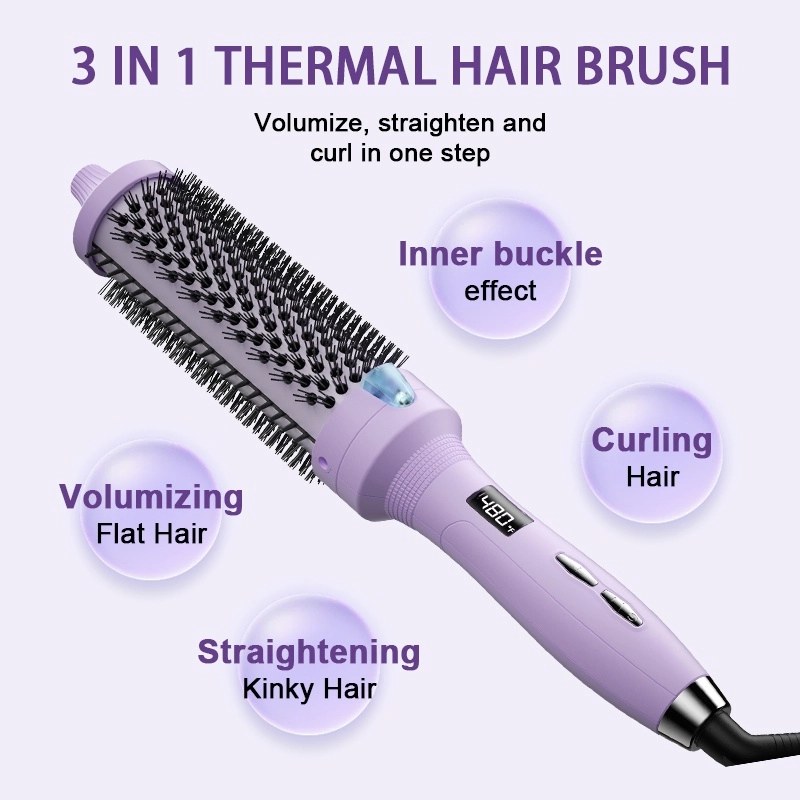
Link Beauty accepts wholesale, OEM and private-label inquiries for M5002. The quantity request can therefore name the required sizes and describe the intended branding. Any requested color, finish or packaging still needs a model-specific response. The existence of three sizes does not establish a mixed-size minimum, and a family name should not be used as a substitute for confirmation of the offer.
An inquiry can show definite quantities and alternatives without treating them as the same commitment. A selected size can carry the proposed order quantity while another remains an option awaiting a quotation. The distinction is useful when comparing offers. It also prevents an interesting variant from being included in stock merely because it appeared in the initial inquiry.
Separate Essential Customization From Optional Requests
Customization can be discussed in order of necessity. A brand name on the product may be essential, while a particular surface finish could be optional. Both requests can be included, provided the supplier can see which one determines whether the launch goes ahead. A separate alternative is easier to compare than a quotation that quietly substitutes a different presentation to meet a budget.
The revised offer needs to show what has changed. A smaller quantity, a different retail pack and a separate preparation charge can each alter the amount payable, even if the price per brush looks similar. The buyer can then compare the same purchase scope across the alternatives. A reduction in customization is a proposal to discuss, rather than an automatic route to a lower MOQ.
Sample terms remain separate. A plain sample might establish the preferred size while leaving the branded retail pack open for review. The heated round brush size-selection guide can help resolve the diameter decision before the order allocation is finalized. Sample charges, any later credit and the version actually being approved still need agreement; the arrival of a sample settles none of those commercial questions by itself.
Test the Order Against Demand and Available Cash
The quantity requested by a supplier has to be compared with the quantity the business can use. A launch forecast and a cash limit belong in the approval file before a volume discount is considered.
Confirmed Demand and Forecast Inventory
An allocation exercise can expose a weak first-order plan. Suppose, purely for planning, a brand proposes 600 brushes spread equally across three sizes and two colors. That leaves 100 units per variation. These are illustrative buying quantities, not a Link Beauty MOQ or sales forecast. A headline total can look substantial while the stock assigned to each variation is quite different.
The seasonal forecast needs to be read at the right level. NRF’s forecast for the 2026 holiday season projects 4.2% growth in U.S. retail sales in November and December over 2025. It says nothing specific about demand for a heated round brush, let alone the preferred diameter. For a seasonal purchase, retailer allocations and the intended stock-arrival date still have to justify the order.
Total Commitment and Order Alternatives
A budget comparison can start with the quoted purchase quantity and unit price. Separately priced work and packaging are then added, followed by the delivery-related costs included in the comparison. This gives purchasing an amount to approve. It also exposes an offer that reduces the unit price while requiring more cash than the launch has available.
If the minimum is too high for the launch, the next discussion is about the brief. Possible requests include fewer selected versions, a different presentation or an alternative commercial proposal. Availability and revised terms require confirmation. Increasing a sales forecast merely to make an offer appear affordable would leave the original inventory problem unsolved.
Agree the Conditions for a Later Reorder
The first purchase also establishes records that will matter when stock is replenished. The quotation, approved presentation and quantities by version need to be retained together. That makes a repeat inquiry more precise than a request for “the same brushes again,” particularly if only one size is selling through.
For an M5002 repeat order, retain the selected diameter and its matching power rating, with the approved branding record. Those details give Link Beauty a defined version to quote. A change to the size split or presentation should be identified in the repeat request so the earlier minimum and supply terms can be reviewed against the new requirement.
The Link Beauty manufacturing information provides context for the production discussion, but reorder quantities and commercial conditions are still project questions. If unused printed packaging is part of the plan, the parties also need to agree whether it will remain usable and how a later artwork revision would be handled. A possible reorder should not be treated as guaranteed consumption of the remaining boxes.
Prepare the First-Order Quantity Request
A short, specific request is more useful than a long product wish list. It should make the proposed purchase clear enough for the minimums to be checked without another round of questions about the basic allocation.
- M5002 sizes being requested, with units against each selected version.
- Destination market, sales channel and proposed retail presentation.
- Essential branding, with optional changes identified separately.
- Questions about configuration minimums, permitted combinations and packaging quantities.
Once the reply arrives, the quantity split is worth checking before attention turns to the discount. Any substituted version or revised packaging amount should be visible in the acceptance record. The final purchase order needs to describe the same goods to the supplier, the warehouse and the people preparing the retail listing.
Conclusion
Before a first stock order is released, the buyer needs to be able to explain where the units are going and what the quotation requires. The heated round brush MOQ is part of that decision. So are the units assigned to each version, any additional packaging purchase and the total cash required for the launch.
The M5002 inquiry can identify the selected diameters, matching power ratings and intended quantities, with essential branding set out separately from options. A purchasing team can discuss a first heated brush order with Link Beauty on that basis. The reply should settle which quantities can be combined and which conditions still need approval, leaving the first purchase ready for a commercial decision.
FAQ
Can different barrel sizes count toward one MOQ?
That depends on the quotation for the order. The request needs a quantity for each size, followed by a clear answer on whether those quantities can be combined. An agreed overall total does not remove the need to identify the versions being purchased.
Is a sample order subject to the same minimum?
Sample terms and production terms should be confirmed separately. A sample may be available for evaluation without establishing the minimum for a branded bulk order. Charges, customization and any later credit also require agreement; none should be inferred from the sample’s arrival.
Can unused branded packaging be kept for a reorder?
It is a point to negotiate, not an automatic private-label service. Ownership, storage, charges and the effect of future artwork changes need to be clear. The buyer should also confirm whether a repeat appliance order would be accepted on the terms assumed in the packaging plan.